
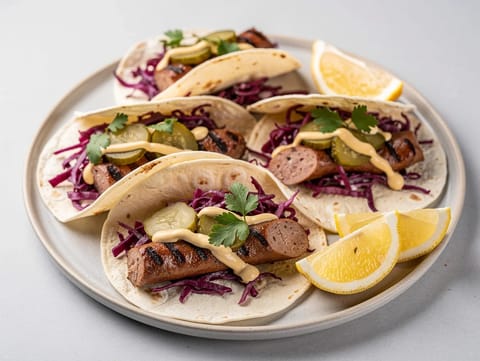
German Street Tacos with Bratwurst and Mustard Yoghurt Sauce
Bratwurst tacos with red cabbage, gherkins and mustard yoghurt sauce

Tacos are a build-at-the-table meal in a small format: a warm tortilla, a filling, and a few toppings that bring contrast. That structure is what makes them practical. You can cook one main component ahead, keep toppings fresh, and let everyone assemble their own. The best tacos feel balanced rather than overloaded, with something savoury, something bright, and a texture that stays lively from first bite to last.
A taco is a tortilla folded or held around a filling, usually eaten by hand. The tortilla is not just a wrapper: warming it changes both flavour and flexibility, and it helps the taco hold together. Tacos can be made with many fillings, but they tend to share a few practical traits. Ingredients are cut or shredded so they sit neatly in the tortilla, and toppings are used to add freshness, heat, crunch or creaminess without turning the whole thing into a saucy spill. Compared with burritos or wraps, tacos are typically smaller and more open, which makes the choice of topping and the moisture level of the filling more important.
Bratwurst tacos with red cabbage, gherkins and mustard yoghurt sauce
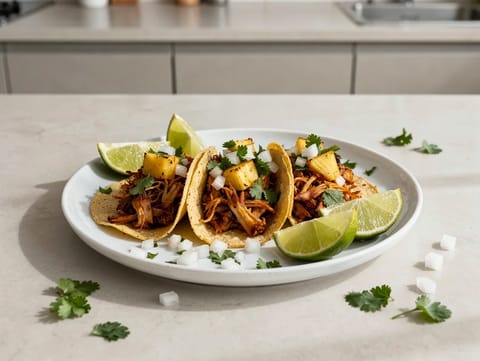
Jackfruit tacos al pastor with pineapple, onion and lime
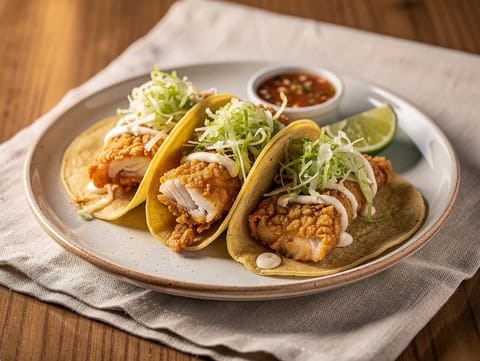
Crispy battered fish tacos with lime crema
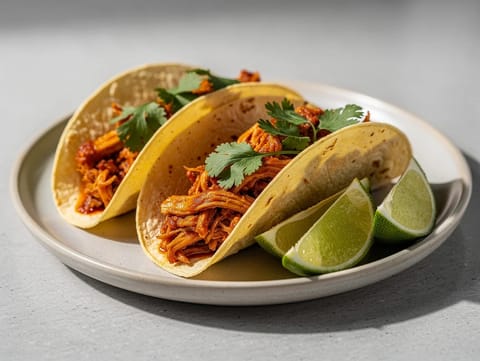
Chicken tinga tacos with smoky chipotle tomato sauce
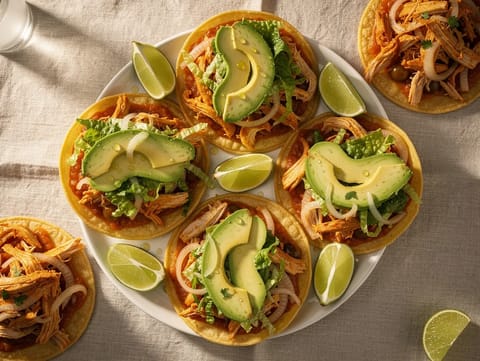
Chicken tinga on crisp tostadas with avocado and crema
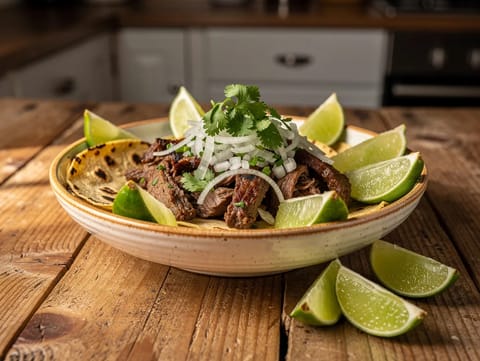
Brisket tacos with onion, coriander, lime and salsa verde
Some tacos are built around quick-cooked fillings such as minced meat, sliced vegetables or seafood, where the appeal is speed and a clean, hot-off-the-pan taste. Others use slower-cooked fillings that shred easily, which gives a softer texture and a deeper, more integrated seasoning. Bean and vegetable fillings often rely on browning, spices and a finishing squeeze of citrus to keep them tasting vivid. Across styles, the most reliable tacos include at least one contrasting element: crisp cabbage or onion against a soft filling, a creamy sauce against something sharp, or a fresh salsa against a richer base. If everything is soft, tacos can feel heavy; if everything is crunchy, they can be hard to bite cleanly.
Jackfruit tacos al pastor with pineapple, onion and lime
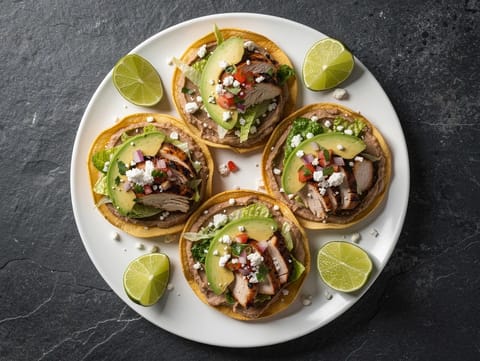
Crisp tostadas topped with spiced chicken, beans and pico de gallo
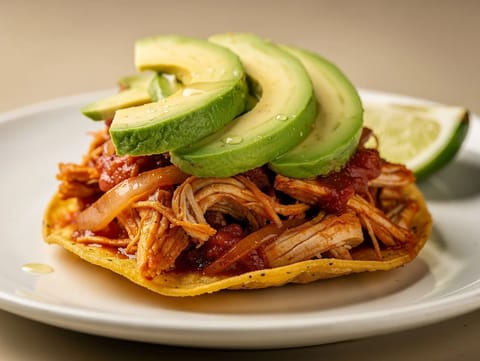
Crisp tostadas topped with smoky chicken tinga and onion
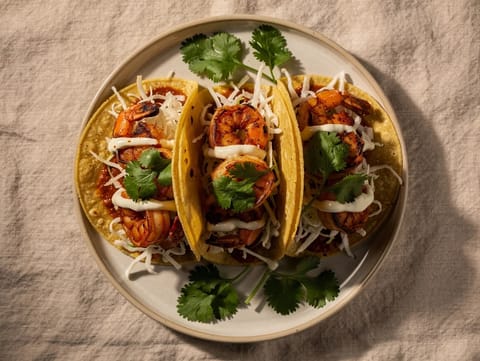
Chipotle prawns in corn tortillas with cabbage and crema
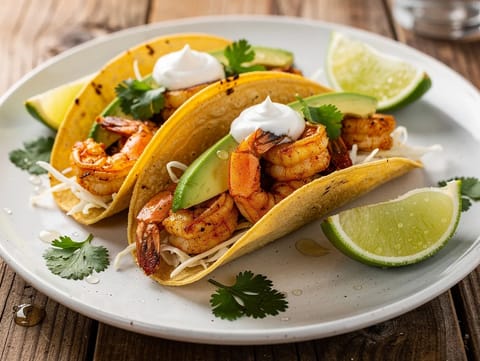
Shrimp tacos with lime, cabbage, avocado and sour cream
Chicken tinga tacos with smoky chipotle tomato sauce
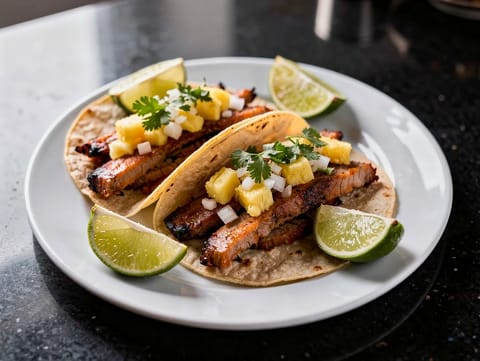
Marinated pork tacos with pineapple, onion, coriander and lime
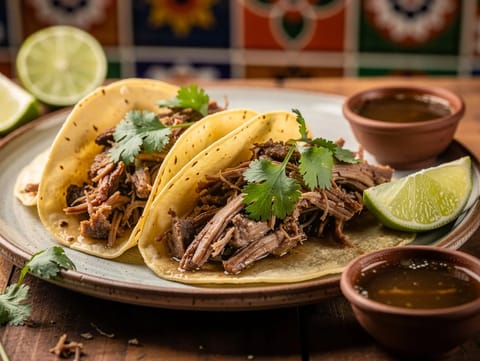
Slow-cooked lamb tacos served with a rich dipping consommé
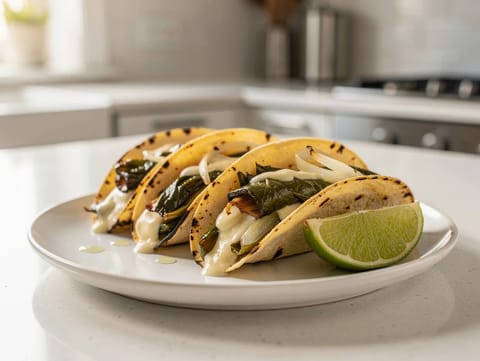
Corn tortillas filled with poblano rajas, crema and melted cheese
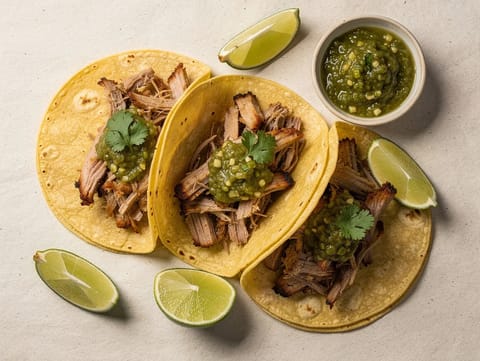
Pork carnitas tacos with tomatillo salsa verde
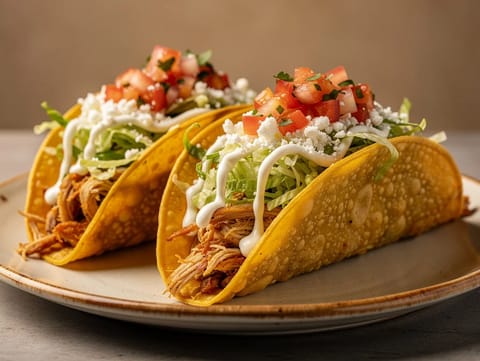
Crispy fried chicken tacos with crema, lettuce and salsa
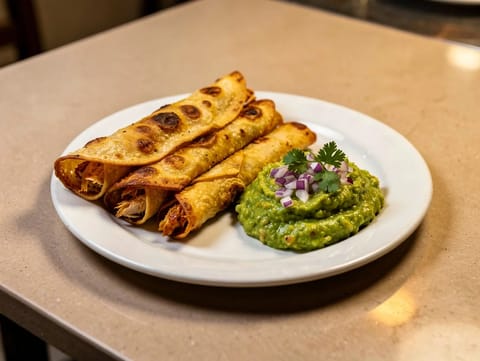
Crisp chicken flautas served with avocado and lime guacamole
Think of toppings as seasoning you can see. Fresh salsa brings acidity and moisture, but it can also make tortillas soggy if piled on too early. Pickled onions or jalapeños add sharpness and cut through fatty fillings. Herbs and citrus lift the aroma right at the end, which matters because tacos are eaten close to the face and smell is part of the experience. Creamy elements such as yoghurt-style sauces, crema or avocado soften chilli heat and help dry fillings feel more cohesive. If you are serving a group, offer a mild base topping and one or two punchier options, so people can adjust heat and acidity without needing a separate dish.
Cuisine is the most natural companion for tacos, because the seasoning, salsas and tortilla choices shift with regional traditions and modern interpretations. Cooking method is also useful when you want to compare quick pan-cooked fillings with slower braises or grilled components that change texture and depth.
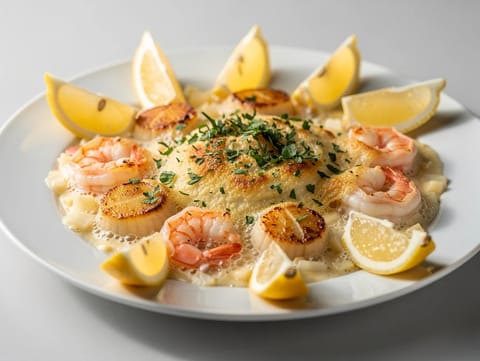
Seafood gratin with prawns, scallops, white wine cream and Gruyère
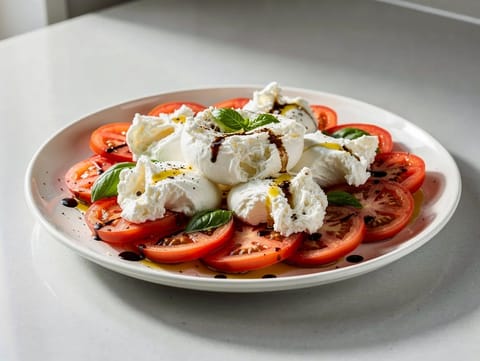
Ripe tomatoes and burrata with basil, olive oil and balsamic
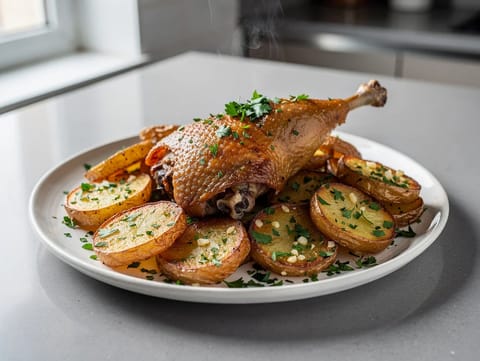
Crisp duck confit with duck fat potatoes, garlic and parsley
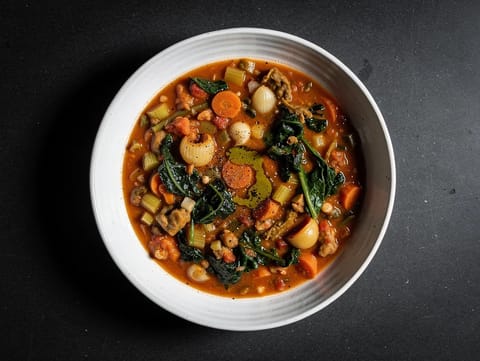
Vegan Tuscan bean and bread soup with cavolo nero

Shortcrust tartlets with vanilla pastry cream and fresh fruit
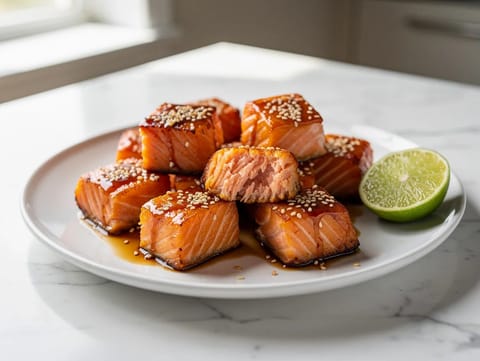
Glazed air-fried salmon bites with soy, sesame and lime.
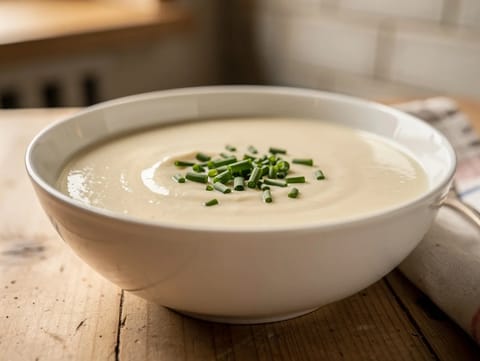
Chilled leek and potato soup blended with double cream

Spanish anise ring doughnuts dusted with caster sugar
Balance and structure. A warm, flexible tortilla and a filling that isn’t too wet make the taco easier to eat, while toppings add the brightness and contrast that keep each bite interesting.
Avoid overfilling, warm the tortillas so they bend without cracking, and add very wet toppings at the last moment. A small smear of sauce can also help ingredients cling together.
No. Heat is optional and can come from salsa, chillies or hot sauce, but many tacos focus more on savoury depth, herbs and acidity.
Yes, by separating components. Cook the filling in advance, keep toppings and salsas chilled, and warm tortillas just before serving.
Tacos are usually smaller and more open, with toppings added for contrast. Wraps tend to be fully enclosed and often rely on a more uniform, less messy filling.
Not necessarily. Corn and wheat flour tortillas behave differently, especially in flexibility and flavour, and recipes may suit one or the other depending on the filling and serving style.
Choose one main filling, then add a bright element and a contrasting texture. Keep wet toppings for the last moment and warm the tortillas properly, and tacos stay tidy and satisfying.
