
Baking powder and bicarbonate of soda both help batters rise, but they are different ingredients. Bicarbonate of soda needs an acidic partner in the recipe; baking powder already includes an acid component. Swapping equal spoonfuls can change rise, flavour and colour.
Step by step
Read the actual label
Check for baking powder or bicarbonate of soda, also called baking soda. Do not identify an unlabelled white powder by tasting it or by a kitchen fizz test. Replace it with a clearly labelled ingredient.
Keep the recipe’s combination
Some recipes use both powder and soda because their acid balance and rising needs differ. Keep the specified ingredients and quantities, including acidic ingredients such as yoghurt or buttermilk.
Measure level quantities
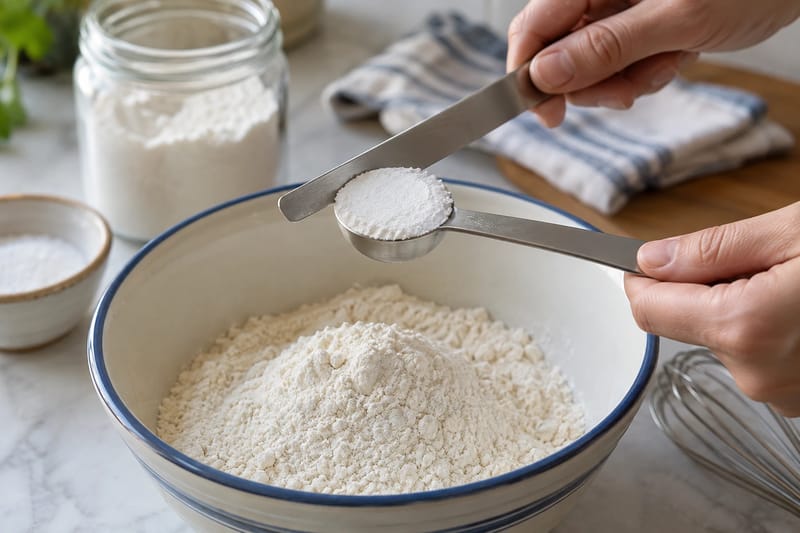
Use the stated weight or level measuring spoon, breaking up small lumps as appropriate. Mix evenly into the dry ingredients unless the recipe uses a different sequence. A heap above the rim adds an uncertain extra amount.
Mix and bake in the intended sequence
Preheat the oven and prepare the tin before combining the batter. Double-acting powder reacts during mixing and again with heat, but the recipe may still depend on prompt baking. Follow any deliberate resting step rather than inventing one.
Poor rise or bitter flavour
Check the product’s date and storage instructions, the measurement and the oven before adding more raising agent. Excess powder or soda can create an unpleasant flavour or unstable rise. Use a tested substitution formula if the correct product is unavailable; bicarbonate of soda is not a one-for-one replacement for baking powder.
