
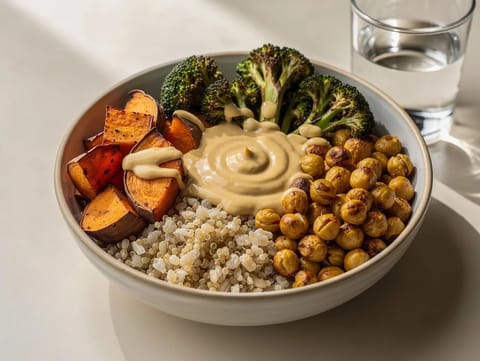
Buddha Bowl (Roasted Veg and Grains)
Quinoa bowl with roasted sweet potato, broccoli and tahini dressing

Grain bowls are built from components, which makes them naturally suited to planning ahead. The key is choosing a grain that holds its texture, then balancing it with something crisp, something creamy, and a dressing that ties the bowl together. When you think about serving style early, you can prep grains and toppings in advance and assemble bowls that still taste lively rather than muddled.
A grain bowl is a composed dish built around a cooked grain, served with toppings and a dressing or sauce. It is less about a fixed recipe and more about proportion and contrast: chewy grains, tender proteins or pulses, vegetables that bring crunch or freshness, and a finishing element that adds acidity, heat or richness.
The term doesn’t specify a cuisine, temperature or diet. Grain bowls can be served warm, room temperature or chilled, and they can lean towards salads, hearty roasted-veg bowls, or protein-forward combinations. What stays consistent is the bowl format and the grain as the anchor ingredient.
Quinoa bowl with roasted sweet potato, broccoli and tahini dressing
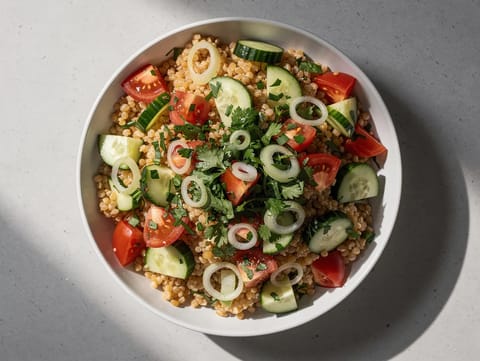
Bulgur bowl with tomato, cucumber, spring onion and lemon
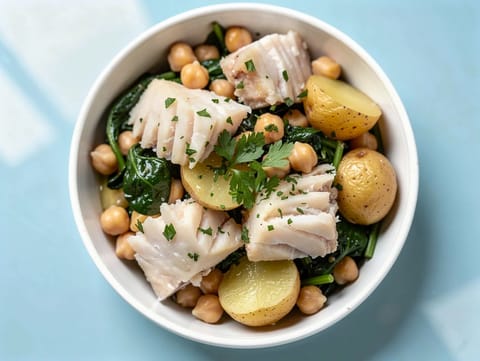
Poached cod with chickpeas, potatoes and spinach
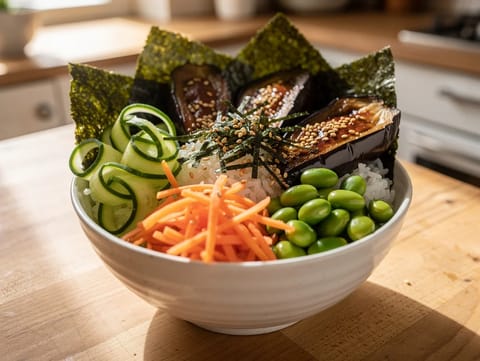
Sushi rice bowl with miso aubergine, edamame and pickles
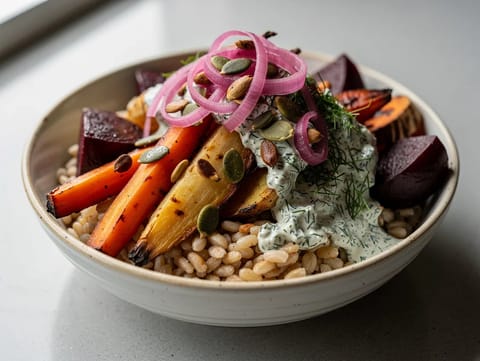
Roasted root vegetables over barley with dill yoghurt dressing
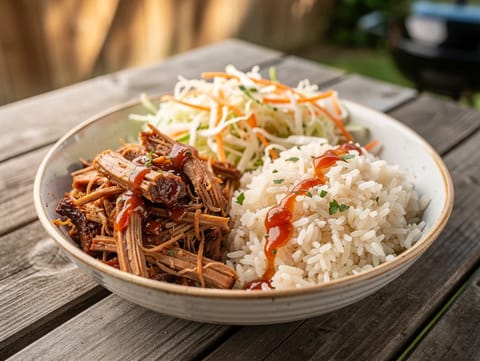
BBQ pulled pork over rice with cabbage and carrot coleslaw
Warm grain bowls often pair a hot grain with roasted or sautéed vegetables and a warm protein, then finish with a sauce that melts slightly into the bowl. This style is forgiving in cooler weather because the grain and toppings stay satisfying even as they cool.
Salad-leaning bowls use grains as a base for raw or lightly cooked vegetables, herbs and a brighter dressing. Here, the grain acts like ballast, making the bowl more filling without turning it into a heavy dish.
Build-your-own bowls are a serving style in their own right: keep grains, toppings and sauces separate, then let people assemble. It is a practical approach when you are feeding mixed preferences, because the same components can become mild or spicy, vegetarian or meat-based, simply by changing the topping choices.
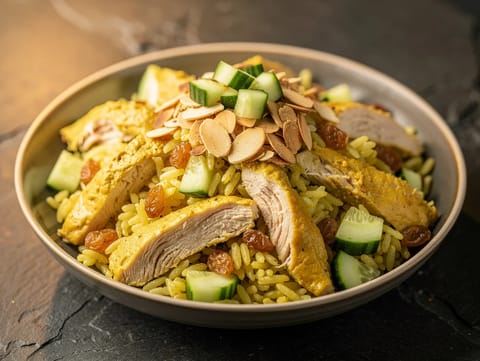
Chilled coronation chicken rice salad with mango chutney
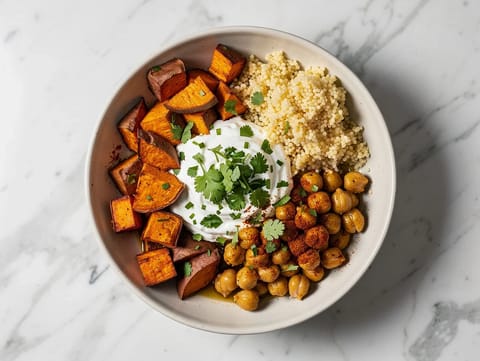
Roasted sweet potato bowl with couscous, chickpeas and yoghurt
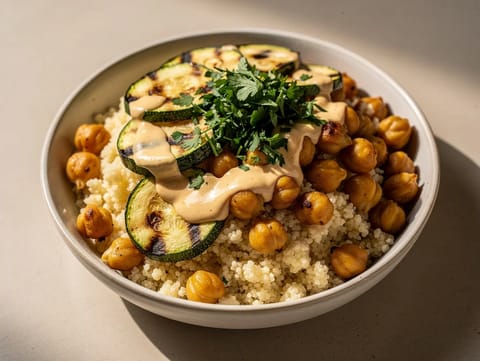
Cauliflower couscous bowl with chickpeas, courgette and tahini dressing
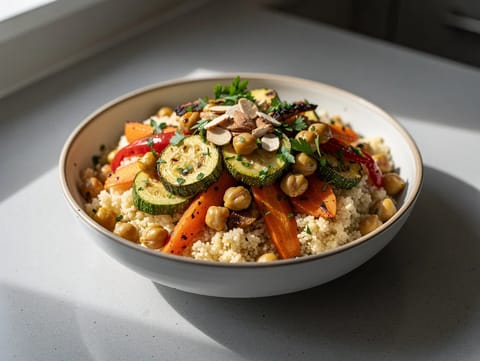
Couscous bowl with roasted vegetables, chickpeas and lemon tahini dressing
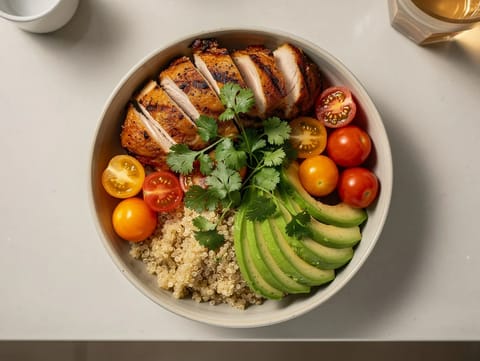
Herb chicken bowl with quinoa, avocado and lime
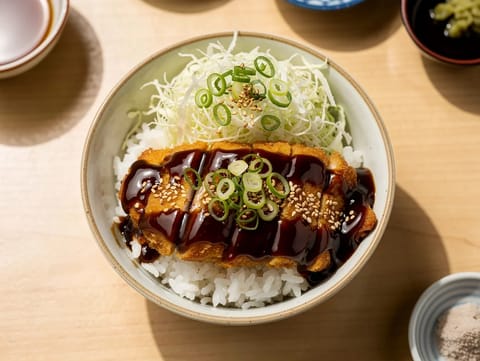
Chicken katsu bowl with sushi rice, cabbage and tonkatsu sauce
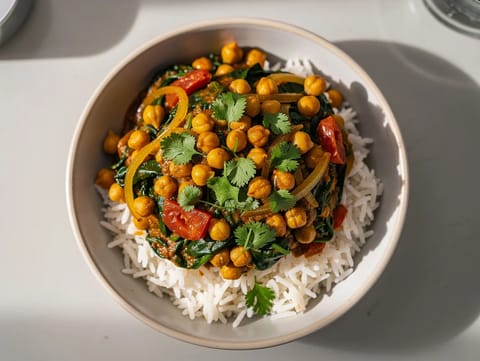
Chickpeas and spinach in tomato masala served with basmati rice
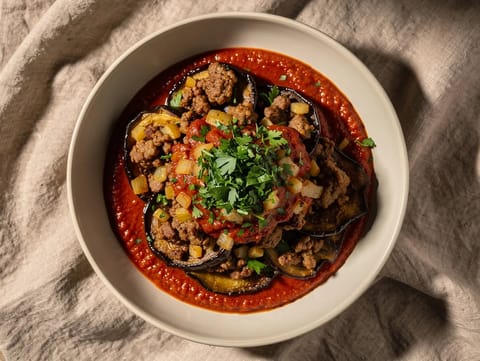
Moussaka-style bowl with aubergine, lamb and yoghurt topping
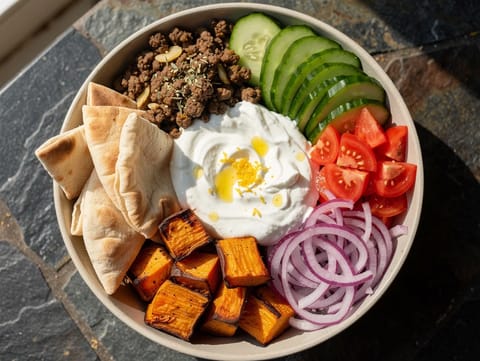
Gyro-style bowl with sweet potato, spiced lamb and pitta
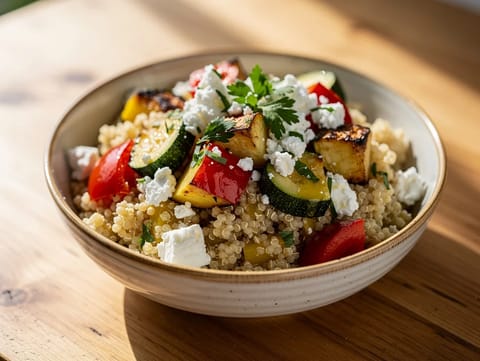
Millet bowl with roasted courgette, red pepper and feta
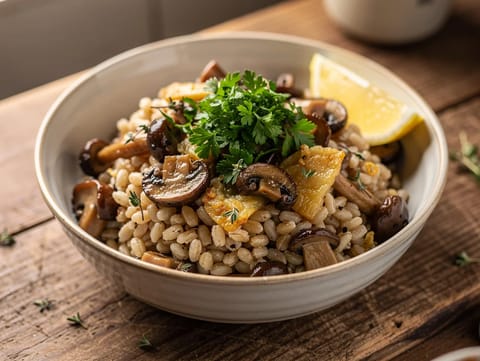
Pearl barley topped with sautéed wild mushrooms and crème fraîche
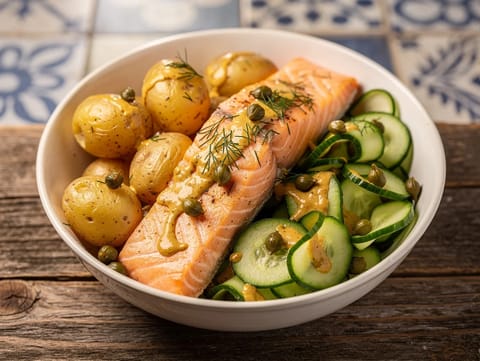
Salmon bowl with baby potatoes and mustard yoghurt
For prep-ahead bowls, choose grains that stay distinct rather than turning sticky. Cook them until tender but not blown out, then cool promptly so they don’t steam themselves soft. If you are using delicate greens, keep them separate until serving so they stay crisp.
Moisture management is the main difference between a bowl that keeps well and one that goes soggy. Roast or sauté watery vegetables to concentrate them, and drain ingredients like beans or tinned vegetables well. Keep dressings and sauces in a separate container and add at the last moment, especially if they contain salt or acid, which can soften vegetables over time.
Finally, plan a finishing element: toasted seeds, nuts, crispy onions, fresh herbs or a squeeze of citrus. It is often the difference between a bowl that tastes assembled and one that tastes intentionally composed.
Cuisine is a natural next step for grain bowls, because the same format can take on very different flavour profiles depending on seasonings, sauces and toppings. Cooking method is also useful, especially if you want bowls built around roasted vegetables, grilled proteins or quick sautéed components.
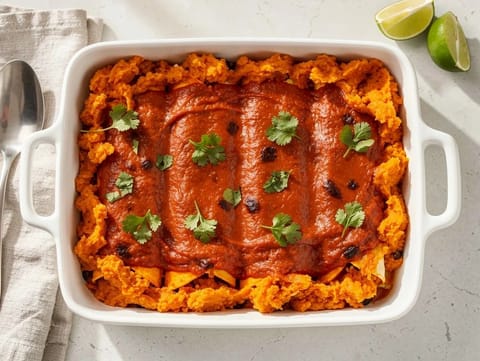
Baked enchiladas with black beans, sweet potato and chipotle
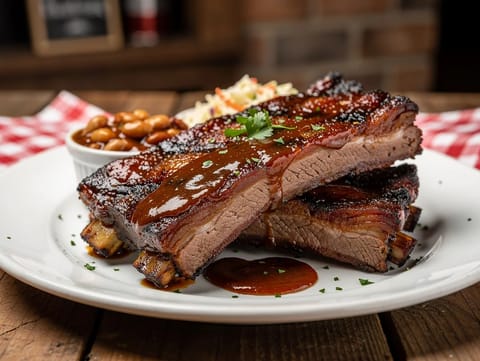
Slow-baked beef ribs with a sweet, tangy BBQ glaze
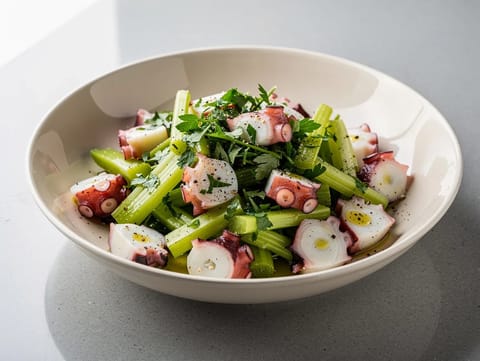
Octopus salad with lemon, olive oil and parsley
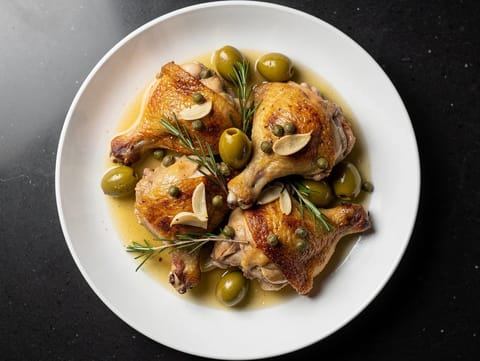
White wine braised chicken with olives and capers
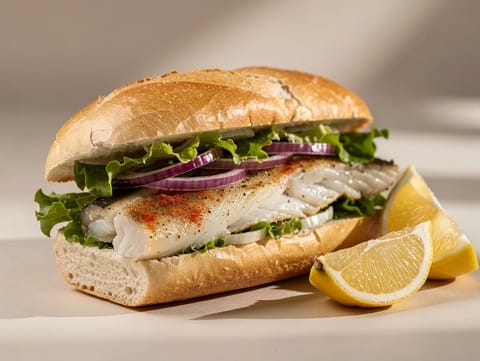
Fish sandwich in crusty bread with onion, lettuce and lemon
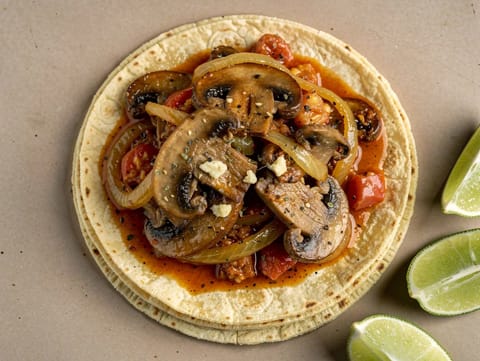
Smoky chipotle tomato mushroom filling served in corn tortillas
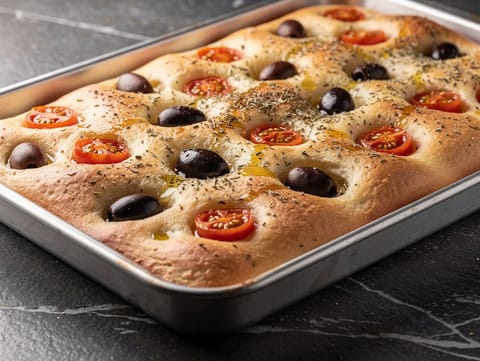
Olive oil focaccia topped with cherry tomatoes and olives
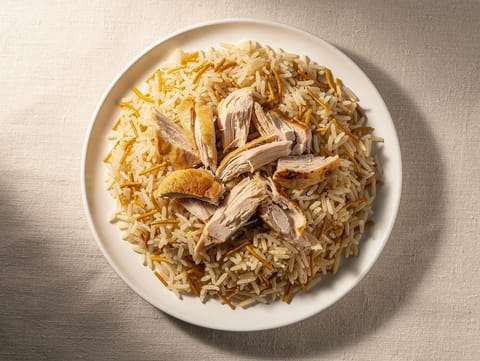
Turkish chicken rice pilaf topped with shredded chicken
No. They can be warm, room temperature or chilled. The serving temperature usually depends on whether the toppings are roasted and hot, or raw and salad-like.
Grains that keep a pleasant chew and don’t clump too much are often easiest for bowls. The exact choice depends on whether you want a light base or a heartier one.
Plan for contrast: a well-seasoned dressing or sauce, something acidic (citrus, vinegar, pickles), and a finishing element such as herbs, chilli or toasted nuts.
Yes, especially if you store components separately. Keep dressings and crisp vegetables apart until serving to avoid sogginess.
A salad can be built around greens or vegetables, while a grain bowl is anchored by a cooked grain. The grain changes the texture and makes the dish more substantial.
Grain bowls are easiest when you decide on the grain, the dressing and the crunch first, then fill in the rest. Prep components with moisture in mind, and you can assemble bowls that taste fresh even when made ahead.
