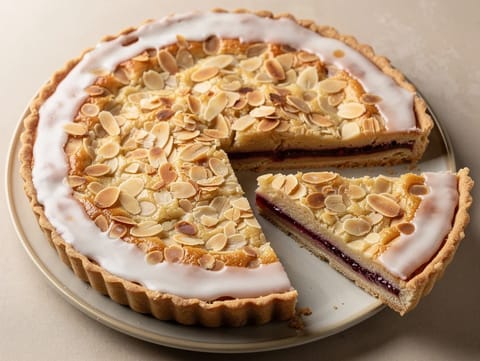
Creaming beats air into butter and sugar for recipes that need that mixing method. The butter should be pliable enough to beat but still hold its shape. Melted butter makes a different mixture and cannot be treated as if it has simply softened.
Step by step
Check the butter before starting
Press it gently: it should yield without collapsing into an oily puddle. Cut firm butter into smaller pieces and allow it to soften as needed. If it has melted, cool it to the recipe’s required state before mixing.
Combine at a low speed
Use the recipe’s sugar and a suitable beater attachment, or a sturdy spoon for a small hand-mixed batch. Start slowly so sugar does not fly from the bowl, then increase to the speed recommended by the recipe and mixer.
Beat and scrape the bowl
Stop the mixer before scraping the sides and base. Bring dense patches into the mixture and continue until it looks lighter in colour and fluffier, with visible ridges that hold briefly.
Continue with the next ingredients
Stop once the intended aeration is reached. Add eggs or other ingredients in the prescribed order. Do not keep beating until the butter becomes warm, glossy and slack.
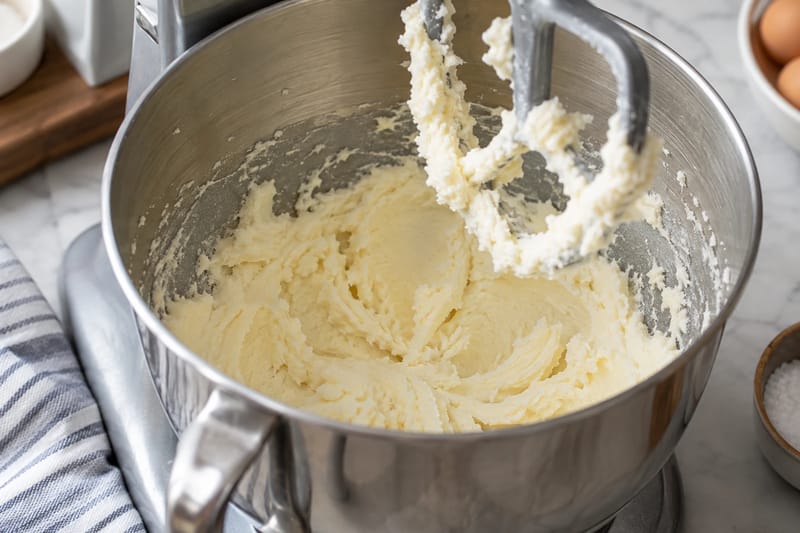
Gritty, dense or greasy mixtures
Some sugar grains can remain even after proper creaming; it does not need to become a dissolved syrup. Very cold butter stays in lumps, while overly warm butter struggles to hold air. Recipes using melted butter or reverse creaming intentionally follow another method, so keep their instructions.