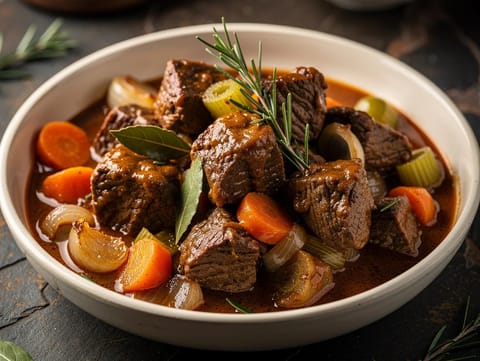
Deglazing means adding liquid to a cooking pan to loosen the browned deposits left by food. Those deposits, often called fond, become part of a sauce, gravy or braising liquid.
Step by step
Check the pan first
Lift out the food if the recipe calls for it. Look at the deposits: brown patches are useful; black, acrid-smelling residue will make a bitter sauce. Discard burnt residue and use a clean pan instead.
Remove excess fat
Carefully pour off excess fat, leaving what the recipe needs. Keep the pan on a stable surface and use a heat-safe container for hot fat.
Add the cooking liquid
Lower the heat and add a modest amount of stock, water or the liquid specified in the recipe. Expect steam and keep your face back. If using wine, take the pan off the heat to add it; never pour directly from a bottle over a flame.
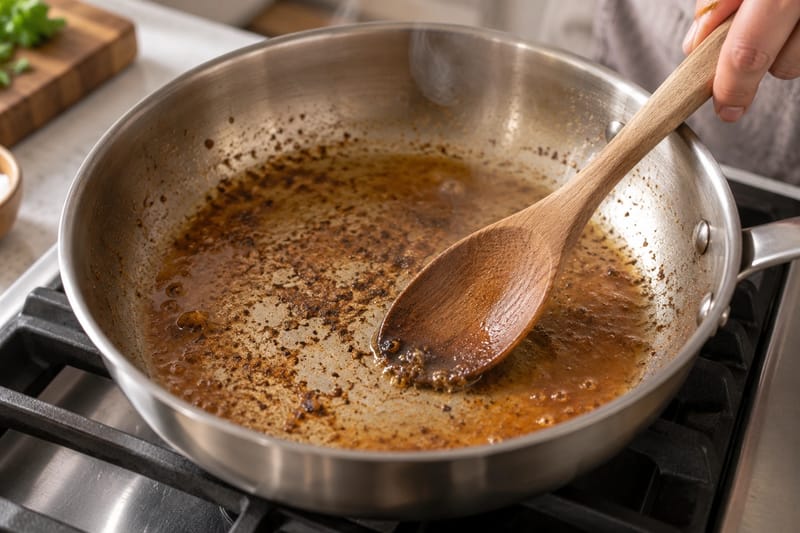
Loosen the brown deposits
Return the pan to a gentle simmer. Use a wooden spoon or a utensil suitable for the pan’s surface to scrape and stir until the brown patches dissolve into the liquid.
Continue with the sauce
Continue cooking the sauce as the recipe directs before tasting. Reducing the liquid concentrates its flavour and salt. Deglazing itself does not require reducing the liquid to a particular volume.
Adding liquid is not always deglazing
A recipe that simply pours stock into a clean pan has not necessarily used this technique. There must be browned deposits to loosen.
If nothing loosens
Give the liquid time to simmer and wet the deposits. Do not gouge a coated pan with a metal tool. If the residue is burnt rather than brown, more scraping will not improve the flavour.