A pan sauce uses the browned deposits left after cooking meat or vegetables. Deglazing dissolves those deposits; reduction then gives the sauce body and concentration. Burnt residue should be discarded before it flavours the liquid.
Step by step
Remove the food and inspect the pan
Transfer safely cooked food to a clean plate. If the food is only browned, continue cooking it promptly in the oven or sauce as the recipe directs. Pour off excess fat if needed, retaining the amount the recipe uses. Reject blackened, burnt residue.
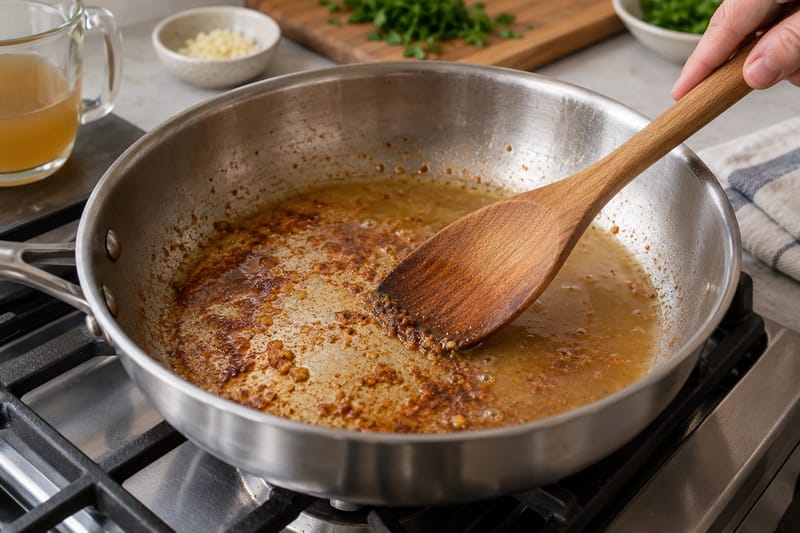
Add liquid and release the brown deposits
Lower the heat. Add the recipe’s stock, water or other liquid carefully and scrape with a suitable spoon. If using wine, move the pan away from open flame before adding it; never pour directly from the bottle over a burner.
Reduce to a balanced consistency
Simmer uncovered until the sauce reaches the required concentration, stirring and checking its body. Use unsalted or low-salt stock where possible so reduction does not make the sauce excessively salty.
Add finishing ingredients and check seasoning
Follow the recipe for cream, butter, herbs or acid. A butter-finished sauce usually needs gentler handling at the end rather than a hard boil. Make sure any raw drippings have been fully cooked before tasting or serving.
Thin, salty or greasy sauce
If a sauce is thin but already strongly flavoured, more reduction may be the wrong fix; use the recipe’s thickening method. For a greasy sauce, remove excess fat before finishing. A small splash of suitable liquid can loosen an over-reduced sauce, but cannot remove burnt flavours. Cooking with wine does not guarantee that all alcohol has gone.