Rinsing can remove loose surface starch from uncooked rice, but it is not the right first step for every product or dish. Read the packet and recipe together: some rice is enriched, some is already prepared, and some dishes rely on starch for their texture.
Step by step
Check the rice and method
Follow any no-rinse instruction on enriched or prepared rice. Use the rinsing method specified for dishes such as sushi rice. Do not add a rinsing step automatically to a risotto recipe that expects its rice to release starch into the cooking liquid.
Rinse gently if required
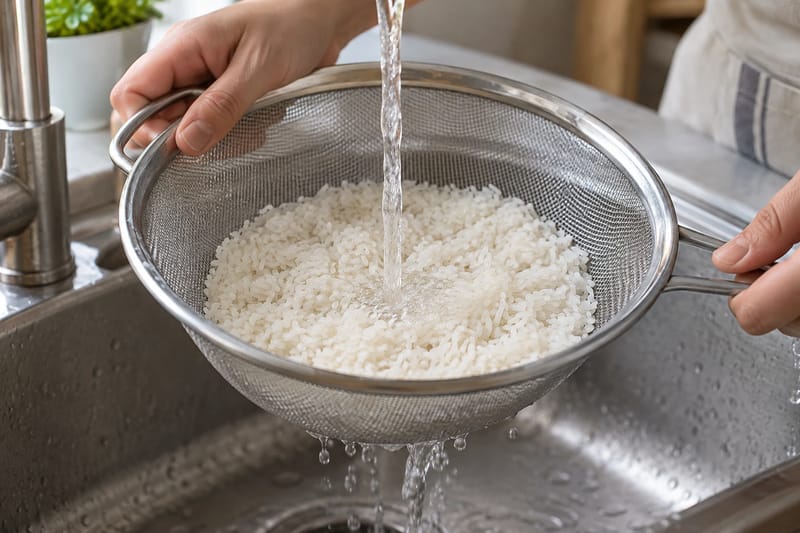
Put the measured dry rice in a fine sieve or a bowl. Run cool water through the sieve while moving the grains gently, or add water to the bowl and swirl. Pour cloudy bowl water away carefully without losing the rice.
Repeat only as needed
Use fresh water until it becomes noticeably less cloudy or reaches the result required by the recipe. Avoid grinding the grains against one another; the aim is to rinse the surface, not break them.
Drain before measuring cooking liquid
Let excess water drain away. Continue with a recipe designed for rinsed or soaked rice so retained water is accounted for. Rinsing is brief washing; a long soak is a separate step that changes hydration.
Cloudiness and safety
Water does not need to become perfectly transparent for every kind of rice. Rinsing does not make rice ready to eat or replace proper cooking and prompt cooling of leftovers. Do not convert a dry-rice quantity using the weight of wet, rinsed grains.