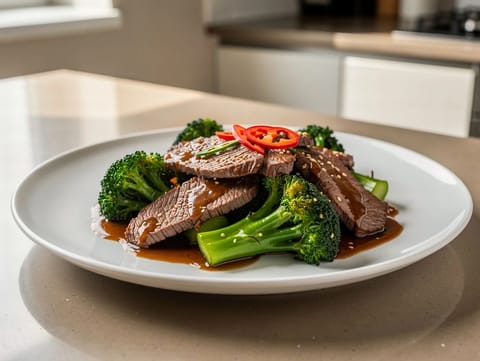
A successful home stir-fry depends on preparation and a manageable batch size. The ingredients cook quickly once they enter the pan, so chopping vegetables or mixing sauce halfway through often leads to uneven results. A wide frying pan can work if you do not have a suitable wok.
Step by step
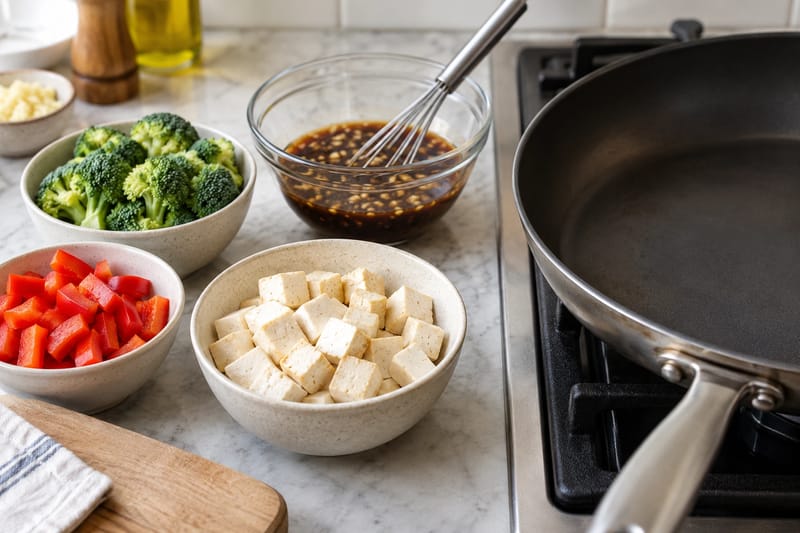
Prepare every component first
Cut vegetables and protein into the sizes the recipe needs. Keep raw animal foods separate. Mix the sauce, drain wet ingredients and have cooked rice or prepared noodles ready if required.
Plan the cooking order
Start firmer vegetables before delicate leaves, or cook separate batches. Cook protein as the recipe directs and transfer to a clean plate only when appropriate; any partly cooked protein must return promptly for thorough finishing.
Keep the pan hot enough for the batch
Heat a suitable pan with the specified oil. Add a small amount of food and move it with a spatula so it cooks evenly. If liquid pools and the pan stops sizzling, cook smaller batches. Avoid overheating nonstick cookware.
Combine and add the sauce
Return components to the pan at the recipe’s stage. Stir any settled starch slurry again before adding. Toss or stir until the sauce coats the food and all raw ingredients are cooked safely. Serve promptly before the vegetables soften further.
Too much liquid or burnt aromatics
Drain thawed or washed ingredients well. Add sauce gradually instead of drowning the food. Garlic and ground spices can burn rapidly in an empty hot pan; use the recipe’s order and have the next ingredients ready. You can make a good stir-fry on a home hob by keeping batches small.