Grams describe mass; millilitres and cups describe volume. In everyday recipes, mass is usually called weight. A cup of flour and a cup of honey occupy the same measured space but do not weigh the same, so changing between them requires the correct ingredient reference.
Step by step
Read the unit and ingredient form
Check whether the recipe gives grams, millilitres, cups or spoons. Note words such as packed, sifted, melted or chopped. They describe what is being measured and can materially change a volume measurement.
Use scales for a stated weight
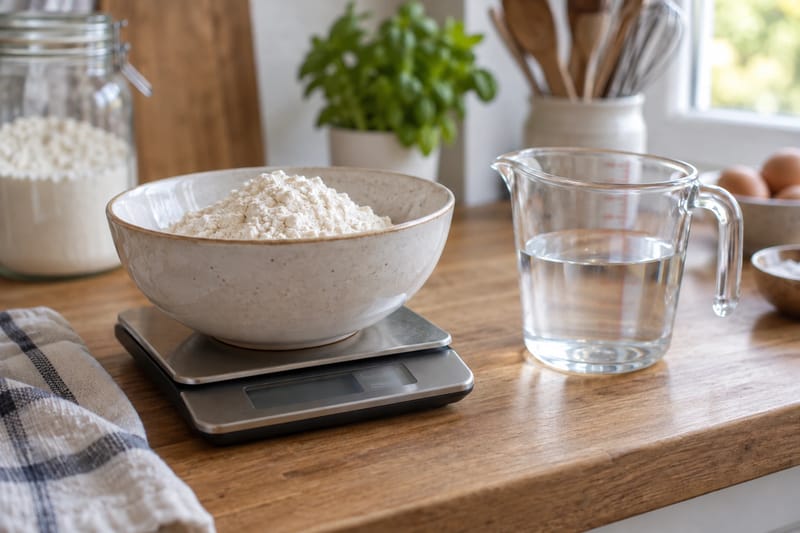
Set a bowl on level scales, select the required unit and tare to zero. Add the ingredient until the target is reached. The bowl’s weight should not be included.
Use the correct vessel for a stated volume
Use marked measuring equipment rather than a drinking cup or ordinary spoon. Check the cup or spoon convention used by the recipe, especially when following recipes from another country.
Convert only with a matching reference
Choose a converter for the actual ingredient and preparation state. Check its cup convention as well as the direction of conversion. A dry-rice reference cannot describe cooked rice, and a packed sugar reference cannot automatically describe loosely filled sugar.
Why the numbers may not agree
Different filling methods can put different amounts of flour into the same cup. A liquid setting on scales may assume a particular density; it does not make every liquid’s millilitres equal its grams. If the recipe already supplies a reliable gram amount, use it rather than converting to cups and back.