
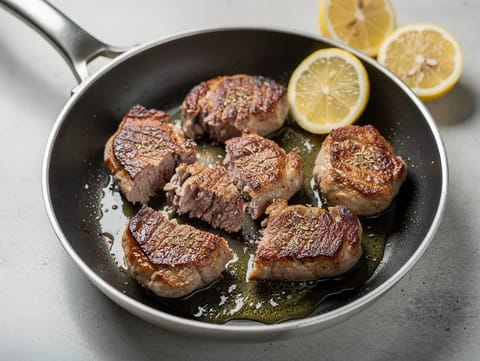
Tigania (Pan-Fried Pork with Lemon and Mustard)
Pan-fried pork with lemon and mustard sauce

Greek cooking often tastes sunlit even when the dish is hearty: lemon, olive oil, herbs and garlic bring lift, while yoghurt, cheese and slow-cooked vegetables add depth. It is a cuisine where small plates sit comfortably alongside substantial bakes and grills.
If you are choosing what to cook, decide first whether you want a mezze-style spread, a simple grill with salad, or a baked dish that can go to the table in one pan.
Greek recipes often fall into three practical shapes. First are the small plates: dips, salads and vegetable dishes designed for sharing, where good olive oil and a squeeze of lemon can be the finishing move. Second are grills and quick-cooked foods, where marinades and oregano-forward seasoning do the heavy lifting. Third are oven bakes and braises, where vegetables, pulses or meat cook slowly with tomato, herbs and olive oil until the flavours meld. Knowing which shape you are aiming for helps with timing and sides. Mezze benefits from variety and contrast; grills want something cooling and crisp; baked dishes often need only bread, rice or potatoes to make them complete.
Pan-fried pork with lemon and mustard sauce
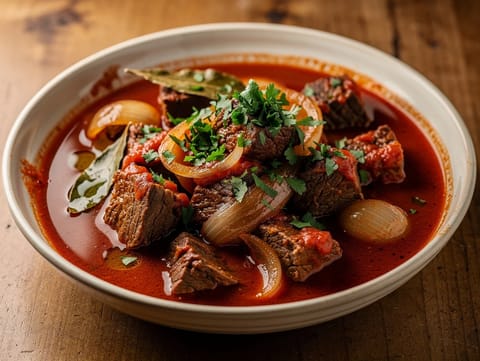
Greek beef stew braised in tomato and red wine
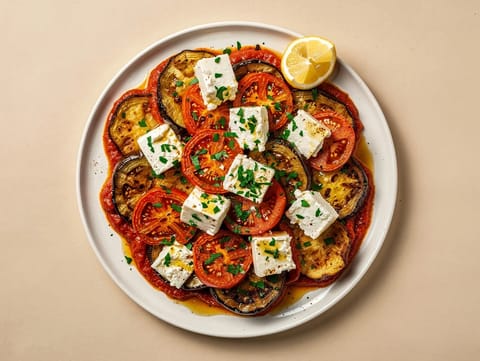
Roasted aubergine baked in tomato sauce with feta and oregano
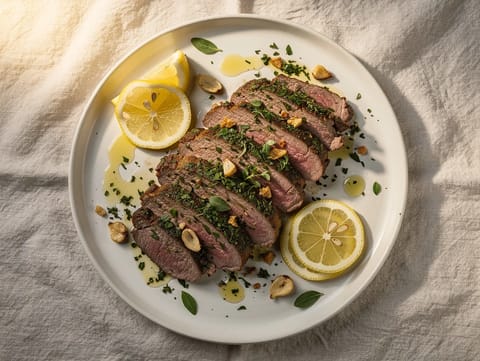
Air-fried lamb with garlic, lemon and herbs.
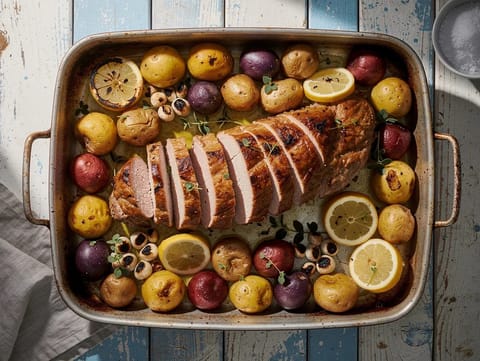
Greek-style pork roast with lemon, oregano and tray potatoes

Ouzo spritz with lemon, syrup, sparkling water and ice
Greek cuisine is not a single template. Coastal and island cooking naturally leans towards seafood, simple grilling and bright dressings. Inland and mountainous areas often feature more lamb and goat, heartier stews, and dishes built around grains and pulses. Across regions, the idea of the table matters: food is commonly served in a way that encourages sharing, with salads, bread and small dishes appearing alongside the main. That context explains why many Greek recipes are designed to be served at room temperature or to hold well while other dishes are finished. It also explains the frequent use of robust herbs and acidity, which keep flavours lively even when dishes sit for a while.
Roasted aubergine and potatoes layered with tomato lamb sauce and yoghurt topping
Braised yiaprakia cabbage rolls finished with a silky lemon and egg sauce
Oven baked Greek beef and orzo in tomato sauce, topped with kefalotyri
Air fryer Greek chicken and potatoes cooked with lemon, garlic and oregano.
Blend Greek yoghurt with honey, banana, milk, and cinnamon until smooth.
Rice bowl with lemon chicken, chopped salad and tzatziki-style yoghurt sauce
Baked phyllo with semolina custard, soaked with lemon-scented sugar syrup
Crisp Greek filo cheese pie filled with feta, ricotta, eggs and dill
Tender lamb with lettuce and spring onions in a silky egg and lemon broth
Slow-simmered stifado with tender beef, soft shallots, bay and warm spices
Pastitsio is layered pasta with minced beef tomato sauce and a baked béchamel topping
Air-fried lemon chicken bowl with couscous, salad, feta and Greek yoghurt.
Olive oil is a foundation rather than a garnish, used for cooking, dressing and finishing. Lemon and vinegar provide the acidity that keeps rich ingredients, such as lamb, feta or fried aubergine, from feeling cloying. Oregano is a signature herb, often joined by dill, mint or parsley depending on the dish. Yoghurt appears as a sauce, marinade component or cooling side, and its tang can soften garlic and spice. Tomatoes, aubergines, courgettes and peppers are common in warm-weather cooking, while pulses and greens carry the cuisine through cooler months. When you see these ingredients together, you can usually expect a balance of savoury depth and clean, sharp edges.
Greek cooking makes strong use of direct heat and steady oven cooking. Grilling and griddling create char and smokiness that pair well with lemon and herbs. Oven bakes often layer ingredients so the top browns while the interior stays moist, as in dishes with potatoes, courgettes or pasta. Olive-oil braising is another recurring approach: vegetables or beans simmer gently in oil, tomato and aromatics until silky, with the cooking liquid becoming part of the dish rather than something to drain away. For home cooks, these methods are forgiving. They reward tasting for acidity at the end, and finishing with herbs or a drizzle of oil to bring the flavours back into focus.
Greek cooking covers everything from dips and salads to grills, bakes and sweets, so choosing by Dish is often the quickest way to land on the style you want. If you already know you want to grill, roast or bake, browsing by Cooking method helps you find Greek approaches that match your equipment and timing.
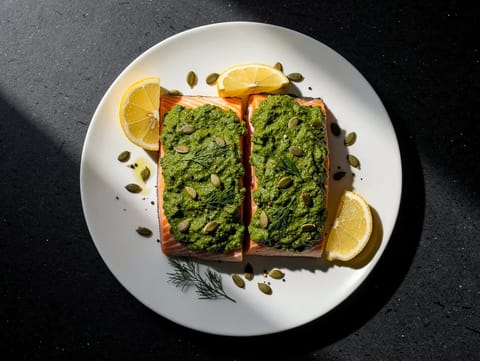
Baked salmon topped with dill pesto and toasted pumpkin seeds

Clear Polish chicken broth simmered with root vegetables
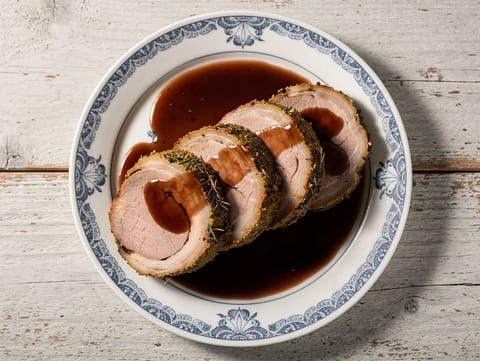
Roast pork roll with mustard and thyme, served with gravy

Spanish lemon and aniseed ring doughnuts with a sugar coating
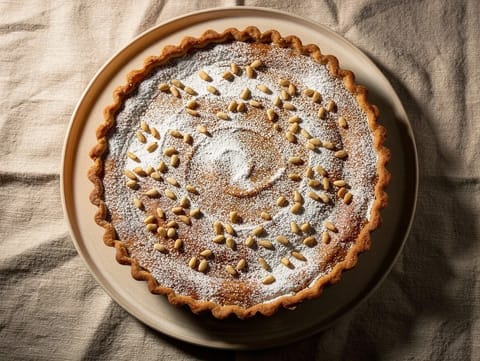
Lemon custard tart topped with pine nuts
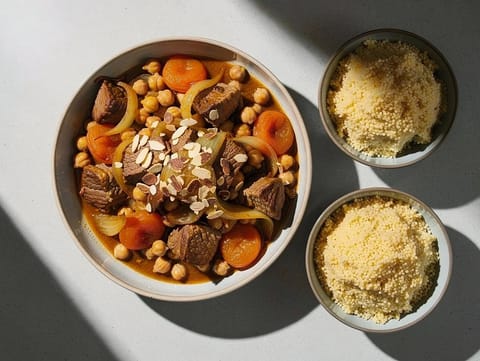
Lamb tagine with apricots, chickpeas and warm spices
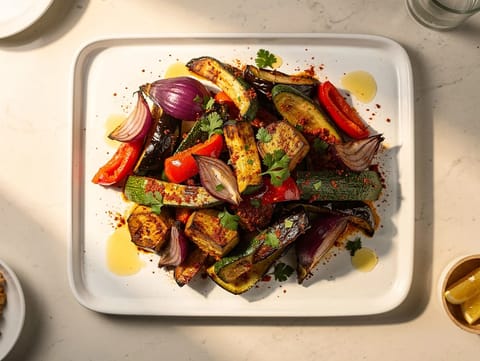
Harissa-roasted vegetables finished with lemon and coriander
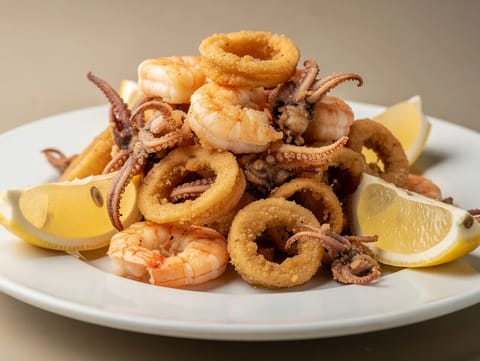
Crisp fried squid and prawns with lemon
Lemon is common, but not universal. Some dishes lean more on tomato, vinegar, yoghurt or wine for acidity, and some rely mainly on herbs and olive oil.
Mezze refers to a spread of small dishes served for sharing. It can include dips, salads, vegetables and small bites, and it is often built around contrast: creamy, crisp, salty and sharp.
The dressing is usually simple and direct, often olive oil with an acidic element, and the ingredients are chosen for clean, distinct flavours rather than being blended into one uniform taste.
No. Feta is a familiar ingredient, but Greek cooking includes many dishes based on vegetables, pulses, seafood and meats where cheese is optional or absent.
Many rely on layering, starches such as potatoes or pasta, and a moist cooking environment from tomato, oil or a custardy element. Resting after baking often helps slices set.
Greek dishes often come alive at the end: a squeeze of lemon, a spoon of yoghurt, fresh herbs, or a final drizzle of olive oil. Choose your main method, grill or bake, then build the plate around something crisp and something cooling.
