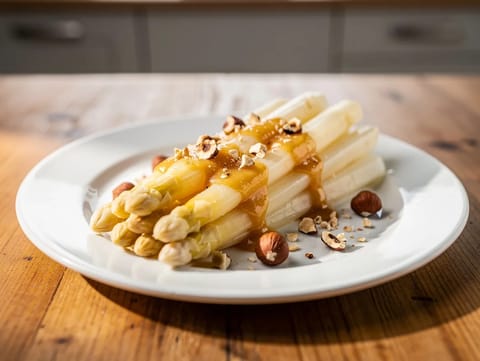
Brown butter gets its toasted aroma from the milk solids that colour as butter cooks. Those tiny solids can go from golden to burnt quickly. Use a pan where you can see them and transfer the finished butter out of the hot pan promptly.
Step by step
Choose a light-coloured pan and a heatproof bowl
Use a light-coloured saucepan or frying pan with room for foaming. Have a heatproof bowl ready. Cut the butter into similar-sized pieces so it melts evenly.
Melt over moderate heat
Let the butter melt and begin bubbling. Water in the butter will evaporate and foam may build. Stay beside the pan rather than judging progress only by a timer.
Stir and watch the solids
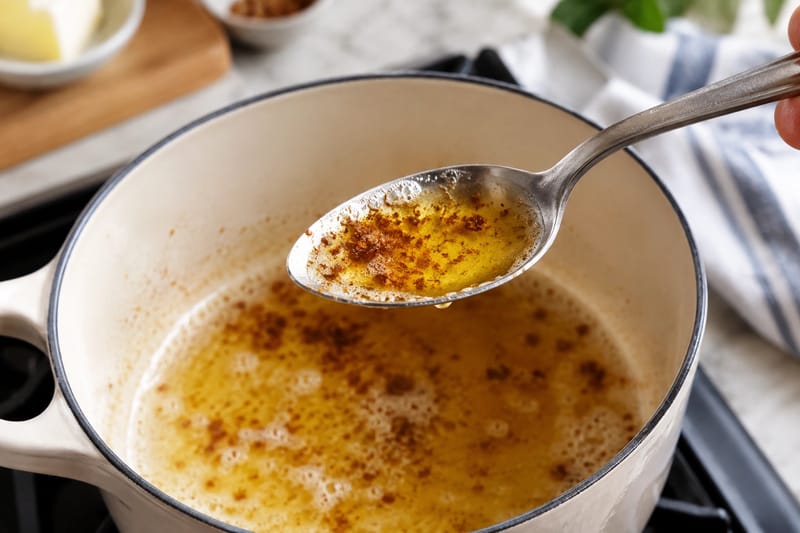
Stir with a heat-safe utensil, reaching the bottom. Look beneath the foam for small milk-solid flecks changing from pale to golden brown. Lower the heat if they darken faster than you can follow.
Stop at a toasted golden-brown stage
As the solids brown and the aroma becomes nutty, remove from the heat and carefully pour into the heatproof bowl. Include the brown flecks for flavour, but start again if they are black and smell burnt.
Using brown butter in another recipe
Browning removes water and changes the butter’s temperature and texture. Follow a recipe designed for brown butter rather than replacing cold or creamed butter with a hot liquid. Clarified butter and ghee do not contain the same amount of milk solids and should not be expected to brown in the same way.