
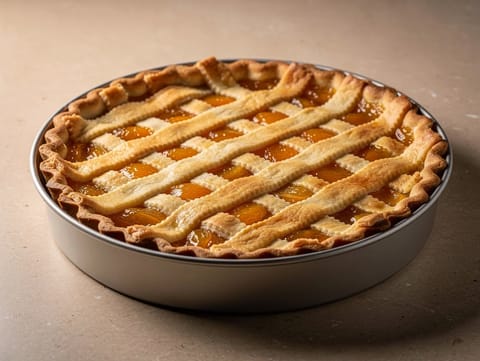
Crostata di Marmellata (Italian Apricot Jam Tart)
Buttery shortcrust tart filled with apricot jam

A tart is defined by its structure: a pastry case that stays distinct from the filling. That single idea covers a wide range, from crisp, shallow fruit tarts to deeper custard tarts and savoury versions built around vegetables, cheese or eggs. When you understand how the pastry and filling interact, it becomes easier to choose the right tart for the occasion, and to predict whether it will slice cleanly, hold its shape, or need to be served with a spoon.
A tart is usually baked in a firm-sided tin, with the pastry forming a defined shell and the filling sitting inside it. Many tarts are open-faced, which puts more emphasis on the surface finish and the set of the filling. Compared with many pies, tarts often aim for a crisper, more biscuit-like pastry and a cleaner slice, though there is plenty of overlap in home cooking. The key practical point is moisture management. A tart shell can soften if the filling is very wet or if it sits for a long time, so recipes often use techniques such as pre-baking the case, brushing with egg, or choosing fillings that set firmly as they cool.
Buttery shortcrust tart filled with apricot jam
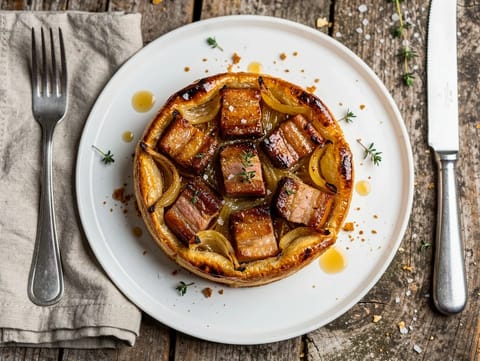
Savoury tarte Tatin with pork belly and caramelised onions
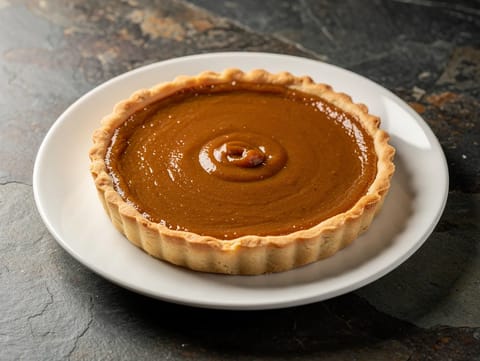
Sweet pastry tart with tangy tamarind and lime filling
Shortcrust tart filled with lemon custard, baked until just set
French tarte Bourdaloue with pears baked over a rich almond frangipane filling
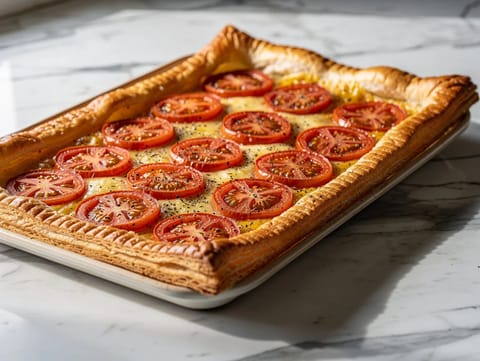
Puff pastry tart with Dijon mustard, tomatoes and Gruyère
Sweet tarts commonly fall into a few families. Fruit tarts may use a baked shell with a layer that protects the pastry, then fruit arranged on top, sometimes finished with a glaze for shine. Custard tarts rely on a filling that sets gently, giving a smooth slice and a delicate wobble when warm. Chocolate and nut tarts tend to set more firmly and can be served in thinner wedges. Savoury tarts often use egg-based fillings, cheese, or vegetables that have been cooked down to reduce moisture. Across all styles, the depth of the tin matters: shallow tarts emphasise crisp pastry and a neat bite; deeper tarts lean more towards a soft, set filling with pastry as a frame.
Picardy-style flamiche with soft leeks, eggs, double cream and nutmeg
Basque burnt cheesecake with a caramelised top and creamy centre
French tarte Bourdaloue with pears baked over a rich almond frangipane filling
Roman-style ricotta tart with lemon, vanilla and a sour cherry jam layer
Shortcrust tart with vanilla custard, topped with berries and kiwi.
Buttery French leek tart with crème fraîche, eggs and a rich savoury custard
Kersenvlaai is a Dutch yeasted tart filled with sweet cherries and baked until golden
Crisp pastry tart filled with vanilla crème pâtissière and topped with glazed strawberries
Rijstvlaai is a yeasted tart filled with baked vanilla rice pudding
A Dutch yeasted tart topped with apricots, baked until set and lightly browned
A chilled no-bake cheesecake flavoured with Turkish coffee and cardamom.
Glossy Brazilian quindim custards with coconut, baked gently in caramel-lined moulds
Tarts are at their best when the pastry stays crisp, so serving temperature and accompaniments should respect that. A custard tart can be served simply, or with fruit that adds acidity without soaking the base. Fruit tarts often benefit from something creamy on the side, which softens sharpness and makes a thin slice feel more substantial. For savoury tarts, a crisp salad or lightly dressed vegetables can provide contrast to a rich, eggy filling. If you are serving a tart to guests, consider how it will be portioned: a firm-set tart slices cleanly for a buffet-style table, while softer fillings are easier to serve as plated dessert with a spoon and a neat garnish.
Cooking method helps you compare tarts that rely on blind-baking, gentle custard setting or a quicker bake for savoury fillings. Course is also useful because tarts can sit in different roles, from dessert centrepiece to lunch-style slice, and the serving expectations change with that role.
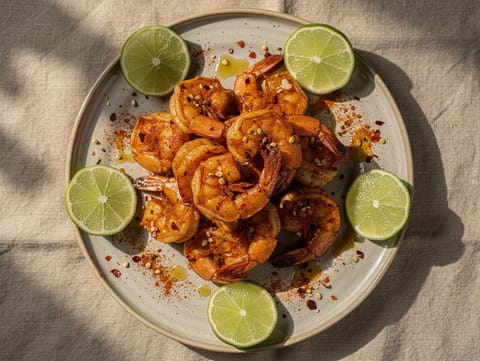
Air-fried spicy chilli prawns with garlic and lime.
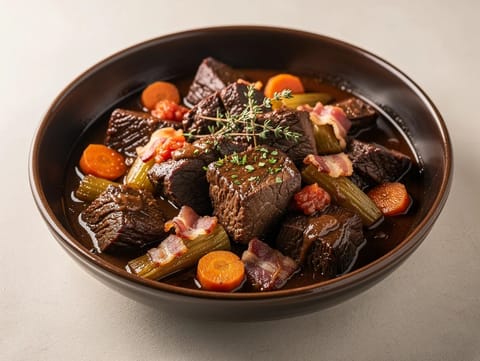
Slow-cooked Provençal beef stew braised in red wine
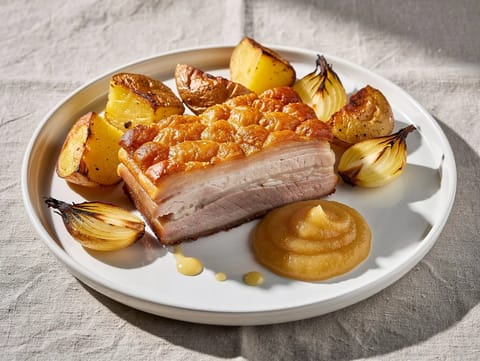
Roast pork belly with crisp crackling, potatoes and apple sauce
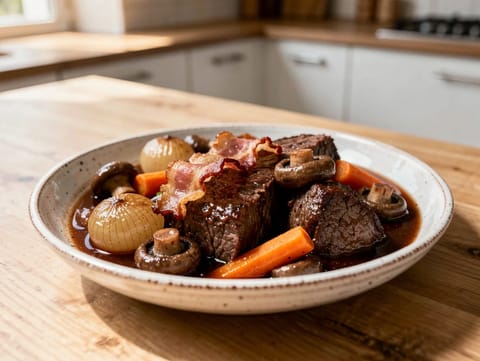
Red wine beef stew with bacon, mushrooms and pearl onions
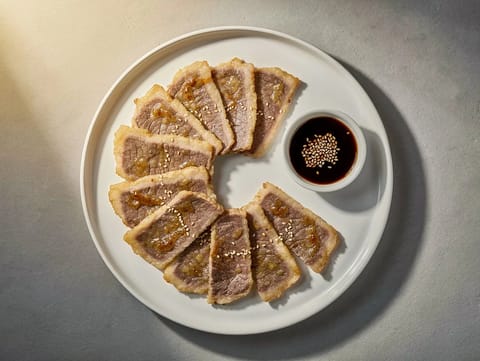
Korean pan-fried beef slices in egg coating with soy dip
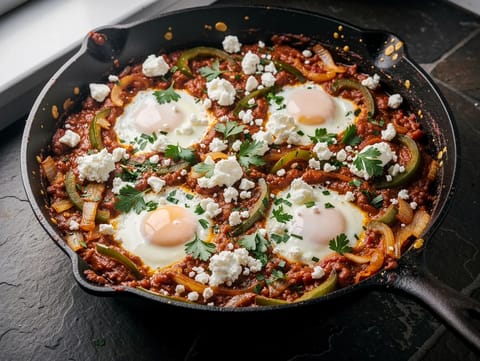
Baked eggs in spiced tomatoes with peppers and feta
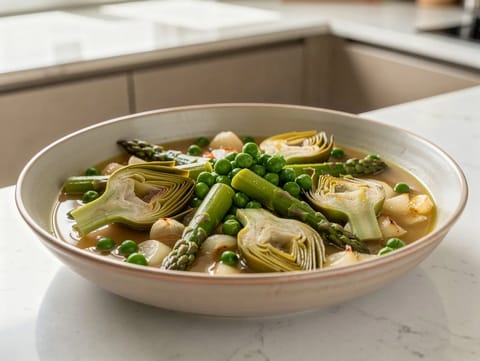
Spanish vegetable stew with artichokes, asparagus and peas
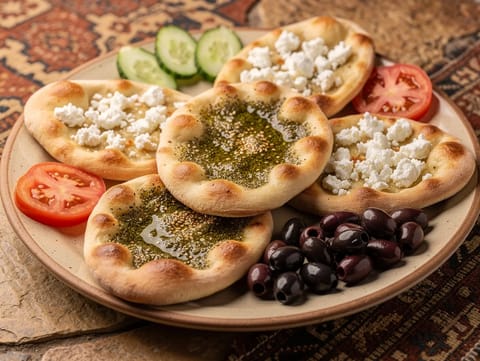
Warm manakish with za’atar, feta, cucumber, tomato and olives
No. Many tarts are savoury, using vegetables, cheese and egg-based fillings. The defining feature is the pastry case and how the filling sits within it.
Pre-baking helps the base set and dry slightly so it stays crisp once the filling is added, especially when the filling is wet or slow to set.
A filling that sets firmly enough as it cools, and a pastry shell that is fully baked. Very warm tarts and very soft fillings are more likely to slump.
Common causes include underbaked pastry, a very wet filling, or letting the tart sit for a long time before serving. Some recipes add a protective layer between pastry and filling to help.
Often, but not always. Many classic tarts are open, which highlights the filling, but there are covered or partially covered versions too.
It depends on the filling. Some custard-style tarts are delicate when hot and slice better once cooled, while many savoury tarts are pleasant warm and still hold together.
When choosing a tart, start with the texture you want from the case: crisp and shallow, or a deeper shell that supports a softer set. From there, pick a filling that matches how you plan to slice and serve.
