
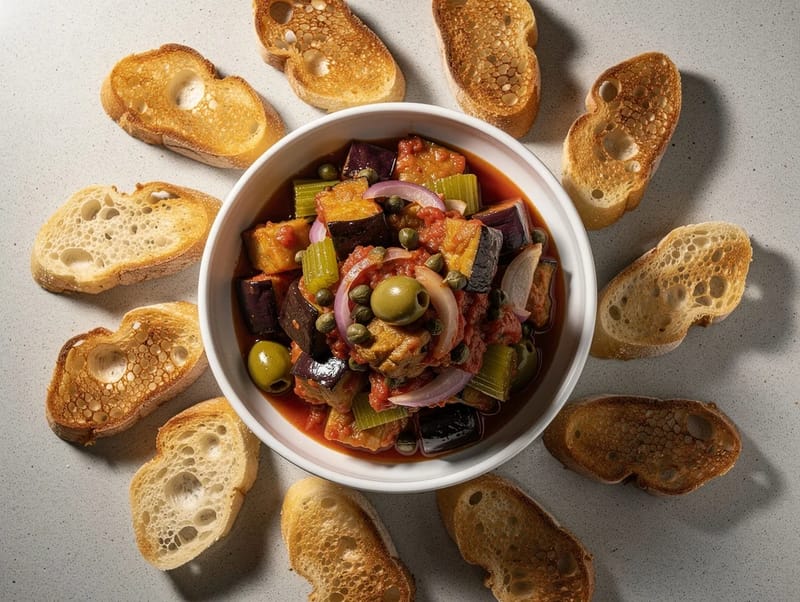
Caponata Siciliana (Sweet-Sour Aubergine Relish) with Crostini
Why this recipe works
- Balanced agrodolce flavour: Red wine vinegar and a little sugar give the relish its characteristic sweet-sour finish without overpowering the vegetables.
- Soft relish, crisp bread: Tender aubergine and a thick tomato base contrast well with crunchy crostini, making each bite more satisfying.
- Briny depth: Capers and green olives add saltiness and complexity, balancing the sweetness of the onion, tomato and roasted aubergine.
- Improves as it rests: A short standing time lets the vinegar, tomato and olive oil settle into a rounder, more cohesive flavour.
Get the most out of this recipe
Authenticity notes
- Sicilian agrodolce style: Caponata is closely associated with Sicily and is recognised for its sweet-sour seasoning, usually balanced with vinegar and a little sugar.
- Served warm or room temperature: It is commonly served as an antipasto or vegetable side rather than eaten straight from the pan, as resting helps the flavours settle.
Timing notes
- Let it stand before serving: Resting the caponata after cooking softens the sharpness of the vinegar and helps the sweet, savoury and briny flavours come together.
- Best serving temperature: Serve it warm or at room temperature, but toast the bread close to serving so the crostini stay crisp.
Ingredient notes
- Choose firm aubergines: Firm, glossy aubergines hold their shape better and give a cleaner texture once roasted and folded into the sauce.
- Balance the vinegar carefully: Taste after adding the vinegar and sugar; the finish should be lively and sweet-sour, not harsh or sugary.
- Use sturdy bread: Slightly stale crusty bread or sourdough makes better crostini because it toasts firmly and holds up under the relish.
Make-ahead tips
- Make the caponata in advance: Cook the relish ahead and refrigerate it once cool; the flavour often becomes rounder after resting.
- Reheat gently: Warm it slowly in a saucepan over a low heat until piping hot, adding a small splash of water only if the sauce has thickened too much.
- Freeze the relish only: Freeze the caponata without the crostini, then defrost overnight in the fridge before reheating or bringing back to room temperature.
Equipment you'll need
Ingredients
Instructions
- Heat the oven to 200°C (390°F). Cut the aubergine into 2 cm cubes and toss with 3 tbsp of the olive oil on a baking tray. Roast for 20 minutes, turning once, until deeply golden and tender.
- Meanwhile, finely slice the red onion and thinly slice the celery. Warm the remaining 2 tbsp olive oil in a large frying pan over a medium heat, then cook the onion and celery for 8 to 10 minutes until softened and lightly golden. Add the garlic and cook for 1 minute until fragrant.
- Stir in the capers and green olives, then add the canned tomatoes. Simmer gently for 10 minutes, stirring occasionally, until the sauce thickens slightly and the celery is tender. Fold in the roasted aubergine and simmer for 2 minutes to bring everything together.
- Stir the red wine vinegar and caster sugar into the pan and cook for 1 minute, tasting for a balanced sweet-sour flavour. Take off the heat and leave to stand for 10 minutes so the flavours settle. Serve warm or at room temperature.
- Toast the crusty white bread until crisp and golden, either in the oven for 6 to 8 minutes or in a dry frying pan. Spoon the caponata into a bowl and serve with the crostini alongside. If you like, drizzle a little extra olive oil over the top just before serving.
Recipe notes
Tips
- For the best texture, roast the aubergine until well browned; pale aubergine can taste spongy in the finished caponata.
- If serving at room temperature, give the caponata at least 20 minutes to sit after cooking so the agrodolce flavour rounds out.
- If you are cooking for anyone vulnerable to foodborne illness, make sure the caponata is served piping hot rather than left standing for long periods.
Substitutions
- Replace red wine vinegar with white wine vinegar for a slightly lighter, cleaner acidity.
- Replace caster sugar with light brown sugar for a deeper, more caramel-like sweetness.
- Replace crusty white bread with sourdough bread for sturdier crostini.
Storage
- Refrigerate up to 4 days
- Cool completely, then refrigerate in a sealed container. Reheat gently in a saucepan over a low heat until piping hot, or serve at room temperature; toast the crusty white bread fresh for best crunch. Freeze the caponata only (not the crostini) for up to 2 months and defrost overnight in the fridge before reheating.
Ratings & reviews
Liked this recipe? Share your feedback to support our cooking community.
Tried this recipe?
Choose 1–5 stars. A comment is optional.
Stay inspired
Discover new recipes, seasonal favourites and cooking inspiration every day. Follow JustRecipes on Pinterest and Spillt.
Recipe overview
- Servings: 2 servings
- Total time: 50min (25min active)
- Difficulty: Medium
- Cuisine: Italian
-
Allergens:
Gluten Wheat
Plan your meals and get a complete grocery list automatically.
Add to meal plannerEquipment you'll need
Got ingredients left?
Find recipes using ingredients from this recipe or what you already have at home.
Find recipes with these ingredients →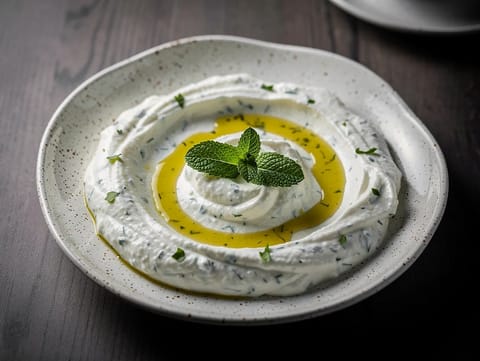
Haydari (Turkish Garlic Yoghurt Dip)
Thick Turkish yoghurt dip with garlic, mint and olive oil
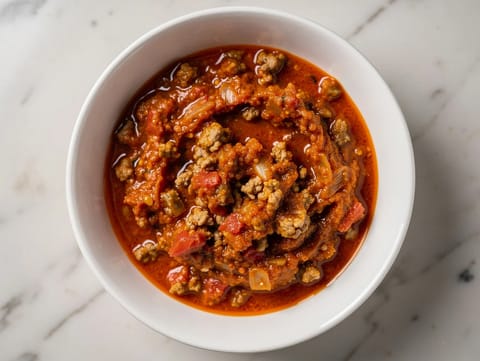
Nam Prik Ong (Northern Thai Pork and Tomato Dip)
Northern Thai pork and tomato dip thickened with red curry paste
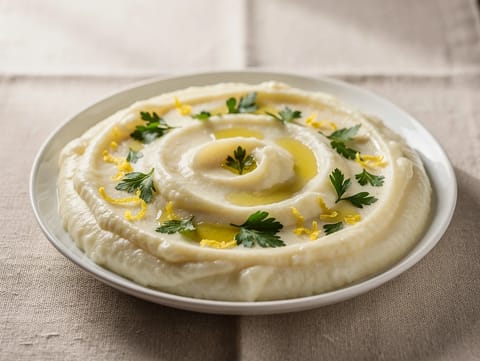
Brandade de Morue (Salt Cod and Potato Purée with Garlic)
Salt cod and potato purée with garlic, olive oil and cream
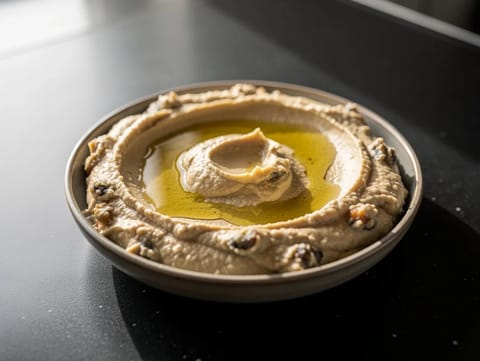
Baba Ganoush (Smoky Aubergine Dip)
Smoky roasted aubergine dip with tahini and lemon
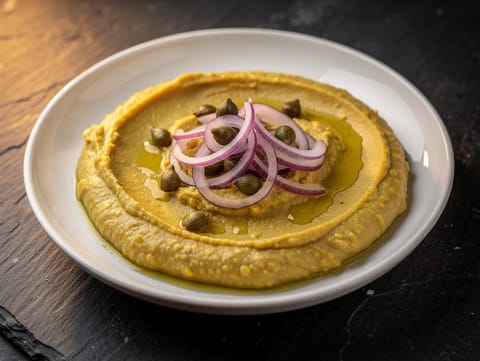
Fava (Yellow Split Pea Purée)
Creamy Greek split pea purée topped with lemon and capers
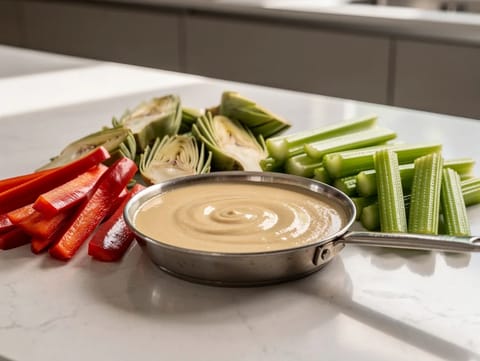
Bagna Cauda (Warm Anchovy and Garlic Dip)
Warm anchovy and garlic dip cooked in olive oil and butter
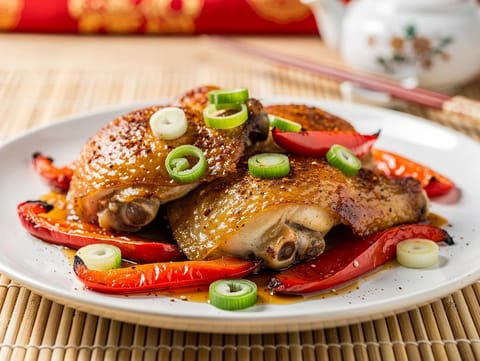
Chinese Five-Spice Chicken Traybake with Soy and Honey
Sticky five-spice chicken traybake with soy, honey and peppers
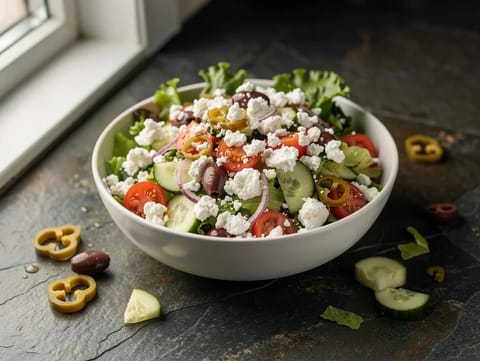
Chopped Greek-American Salad with Pepperoncini
Chopped romaine salad with feta, olives and pepperoncini
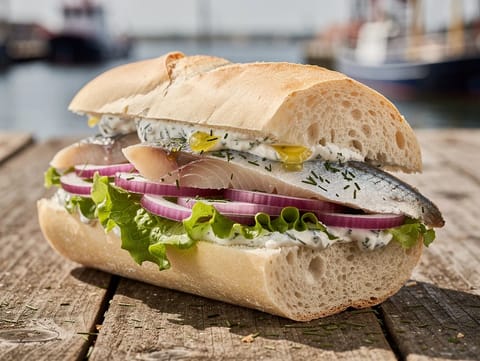
Matjesbrötchen (Pickled Herring Roll with Dill Sour Cream)
Pickled herring roll with red onion and dill sour cream
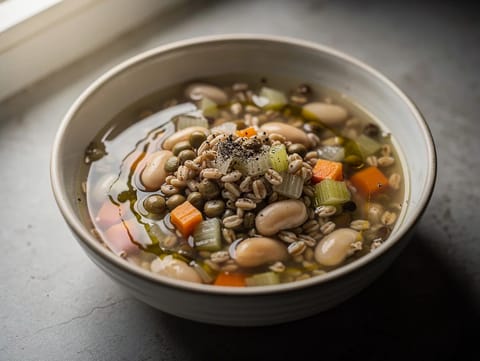
Zuppa di Farro e Legumi (Spelt and Mixed Legume Soup)
Spelt and legume soup with rosemary and vegetables
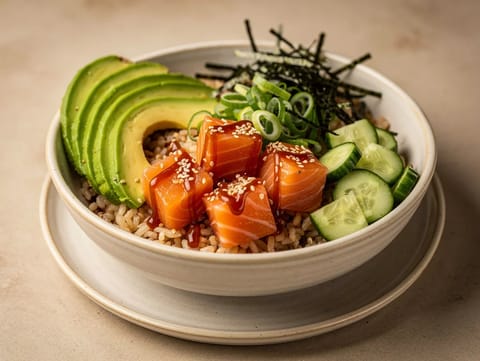
Avocado Sriracha Poke Bowl
Sushi rice poke bowl with salmon, avocado, and sriracha.
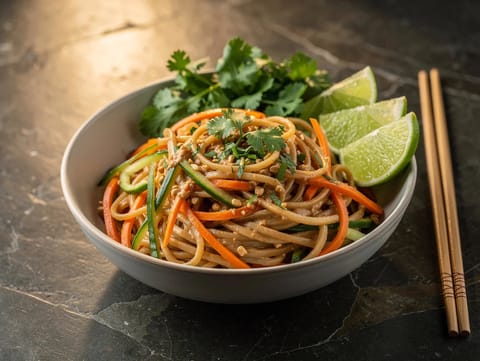
Thai Peanut Rice Noodle Bowl with Cucumber and Carrot
Rice noodles in chilli peanut sauce with crunchy veg
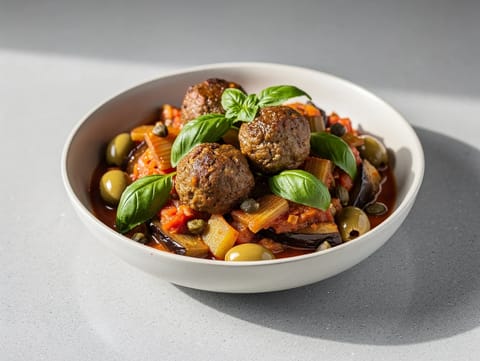
Aubergine Caponata with Beef Meatballs (Caponata di Melanzane con Polpette)
Aubergine caponata with tender beef meatballs, capers and olives
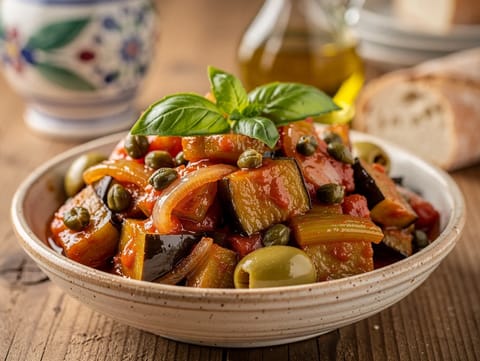
Caponata Siciliana (Sicilian Sweet and Sour Aubergine Stew)
Sweet and sour aubergine stew with capers and olives
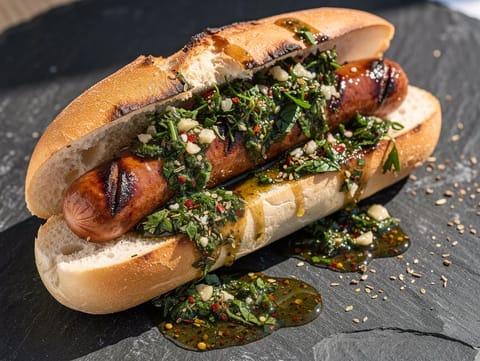
Argentinian Choripán (Grilled Chorizo Sandwich with Chimichurri)
Grilled chorizo sandwich in crusty bread with chimichurri
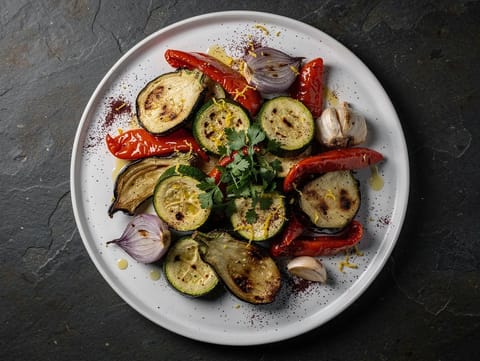
Turkish Roasted Vegetables with Sumac, Lemon and Parsley
Roasted aubergine, courgette, pepper and onion with sumac
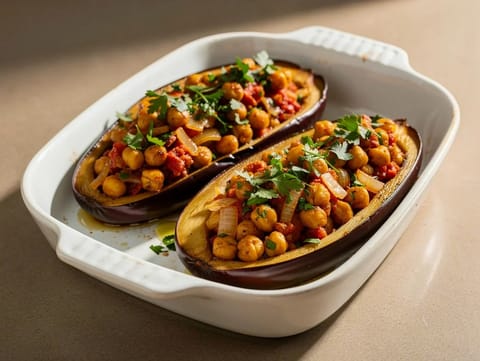
Vegan Stuffed Aubergines with Spiced Chickpeas
Roasted aubergines stuffed with spiced chickpeas in tomato sauce
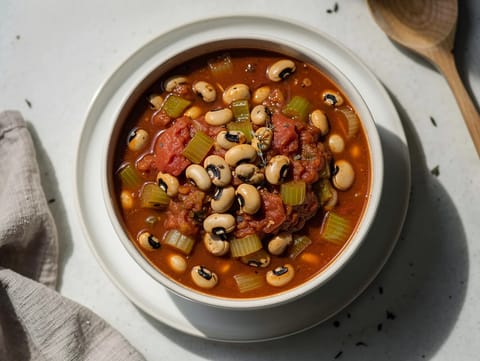
Vegan Black-Eyed Pea Stew
Vegan black-eyed pea stew with tomatoes and smoked paprika
You might also like
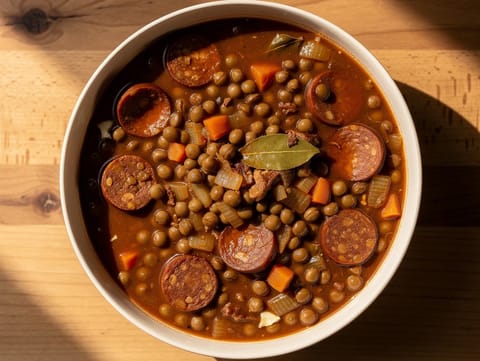
Lentejas Estofadas con Chorizo (Spanish Lentil and Chorizo Stew)
Brown lentil and chorizo stew with bay and smoked paprika
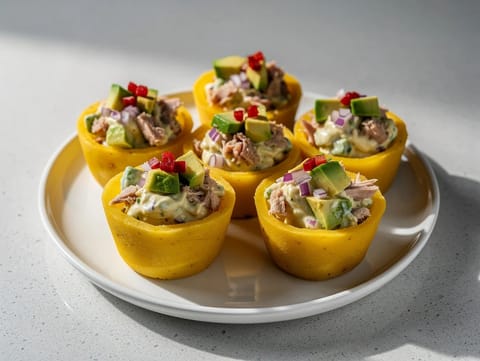
Peruvian Causa Cups (Potato with Tuna and Avocado Filling)
Causa cups with lime potato, tuna mayonnaise and avocado

Đậu Hũ Sốt Cà (Tofu in Tomato Sauce)
Tofu simmered in a light tomato sauce with garlic
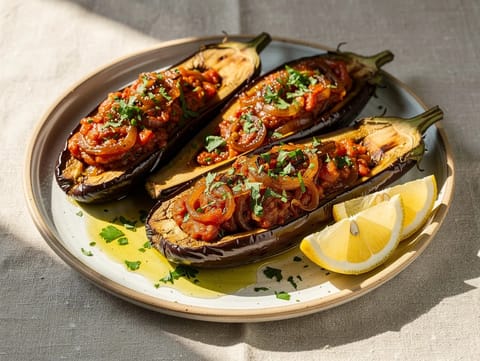
Imam Bayildi (Turkish Stuffed Aubergine with Tomato and Onion)
Baked stuffed aubergines with tomato, onion, garlic and parsley
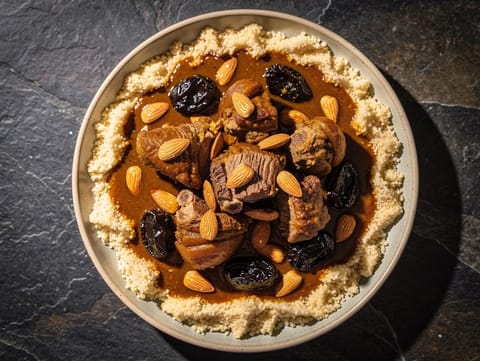
Lamb Tagine with Prunes
Lamb tagine with prunes and toasted almonds

Vegan Tacos de Coliflor Asada (Roasted Cauliflower Tacos)
Roasted cauliflower tacos with avocado, cabbage and lime
Make this recipe easier next time
AdvertisementThese tools help you get better results with less effort.
Misen 8-Inch Chef Knife
- AUS-10 steel
- Balanced design
- Less traditional feel
Titanium & PP Double-Sided Cutting Board
- Separate surfaces for meat and produce
- Resists odors and stains
- Harder on knife edges than wood or plastic
All-Clad HA1 Hard Anodized Nonstick Fry Pan 12 Inch
- Top-tier build quality
- Excellent heat distribution
- Expensive
OXO Good Grips 2-Piece Cutting Board Set
- Two useful sizes with reversible cutting surfaces
- Dishwasher safe and easy to clean
- Plastic surfaces will show knife marks over time
Enjoy cooking with JustRecipes?
Add JustRecipes as one of your preferred Google sources to discover our recipes more easily across Google Search.
Add JustRecipes to GoogleEvery recipe on JustRecipes follows the same structured editorial process. Learn how recipes are created, validated, translated, illustrated, and continuously improved across the platform. How we create recipes.
