
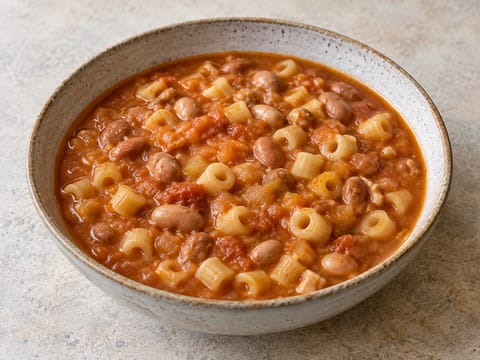
Pasta e Fagioli Napoletana (Neapolitan Pasta and Bean Soup)
Thick pasta and bean soup with borlotti beans, tomato and rosemary

A ladle is a simple tool, but it solves a specific problem: moving hot liquids and loose mixtures safely and in roughly even portions. That shows up in recipes for soups, stews, curries, broths, punchy sauces and batters that need to be portioned into a pan or mould. A ladle also helps you control what you scoop. You can dip below the surface to avoid foam, skim from the top, or reach the bottom of a pot to lift settled ingredients. Used well, it keeps the hob cleaner and the serving more consistent.
A ladle is a deep-bowled spoon with a long handle, designed for liquids and pourable mixtures. Some have a spout for cleaner pouring; others are rounder for scooping. In recipe terms, it is most relevant when you need to transfer hot liquid from a deep pot, or portion a mixture repeatedly. It does not replace a whisk for emulsifying, a spoon for tasting and adjusting, or a sieve for straining. If a recipe asks you to skim fat or foam, a ladle can help, but a dedicated skimmer may be more efficient. Think of the ladle as a transfer and portioning tool first.
Thick pasta and bean soup with borlotti beans, tomato and rosemary
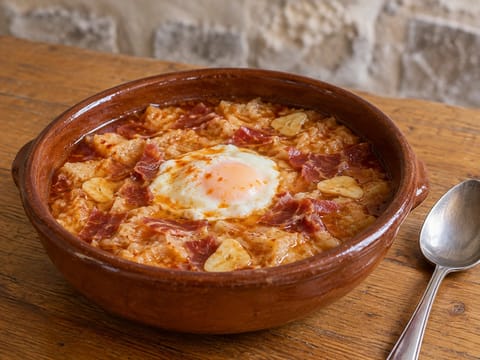
Garlic and bread soup with poached eggs and serrano ham
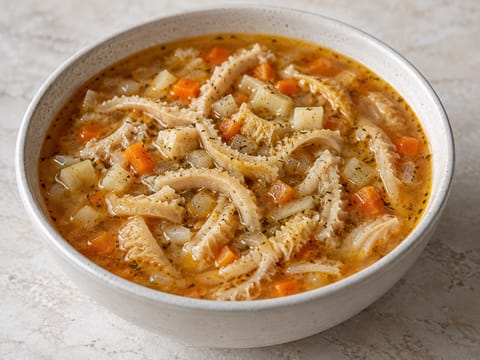
Polish tripe soup with marjoram and sweet paprika
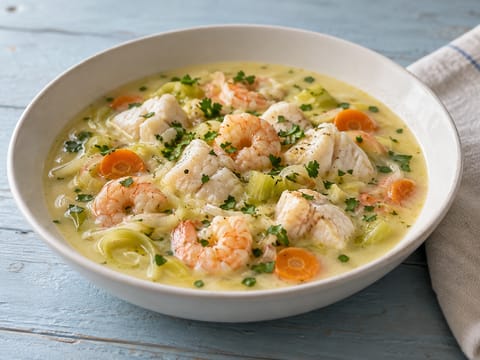
Creamy Ghent-style fish stew with prawns and vegetables
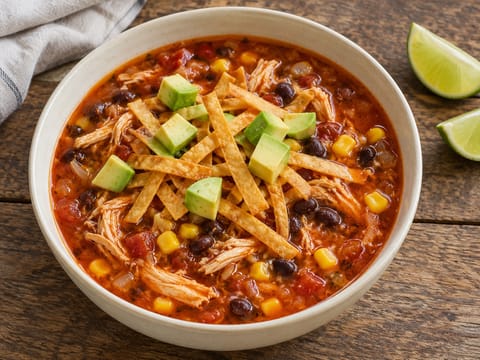
Chicken tortilla soup with black beans, sweetcorn and tortilla strips
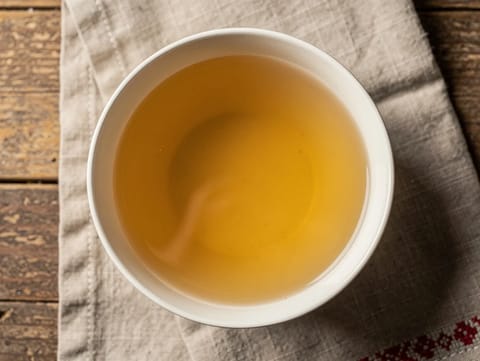
Clear Polish chicken broth simmered with root vegetables
Overfilling is the main cause of drips down the outside of the bowl and onto the rim of the pot. Fill to a comfortable level and pour with the ladle close to the target bowl. Another common issue is scooping without stirring when ingredients settle. In chunky soups or lentil stews, you can end up serving mostly broth at first and solids at the end. A quick stir before each portion keeps things even. Finally, avoid scraping the ladle hard against non-stick surfaces. If you need to lift browned bits or stir vigorously, switch to a wooden or silicone utensil and use the ladle only for serving or transferring.
Clear Polish chicken broth simmered with root vegetables
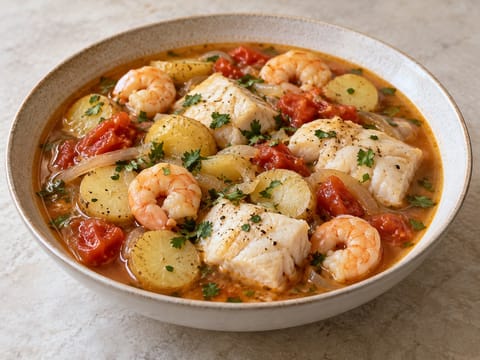
Portuguese fish and prawn stew with potatoes
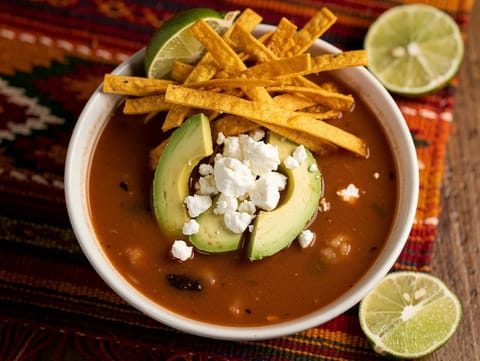
Tomato and chipotle tortilla soup topped with avocado and lime
Thick pasta and bean soup with borlotti beans, tomato and rosemary

Spanish brothy rice cooked in saffron stock with tomato sofrito
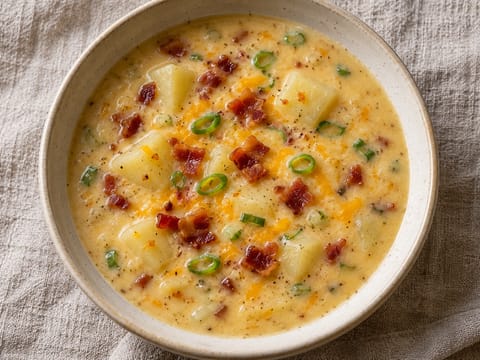
Creamy potato soup topped with bacon, cheddar and spring onions
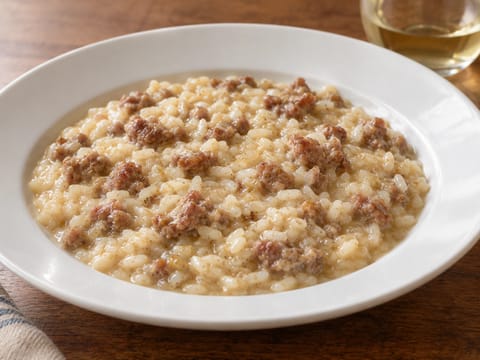
Creamy risotto with Italian sausage and Parmesan
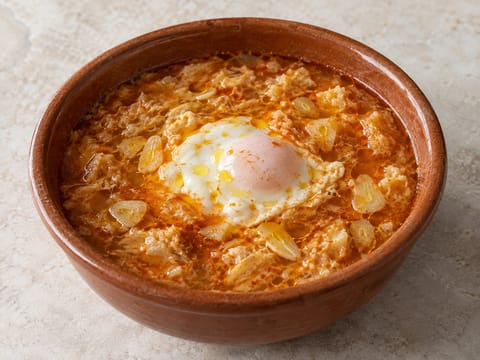
Spanish garlic soup thickened with bread and topped with egg
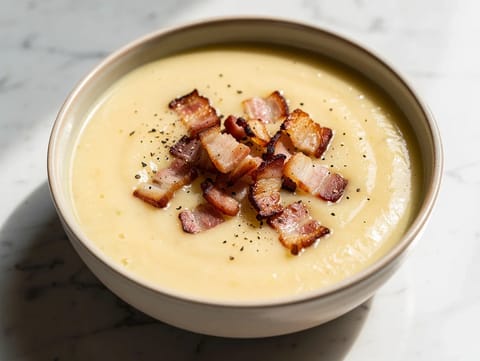
Creamy potato soup topped with crisp bacon
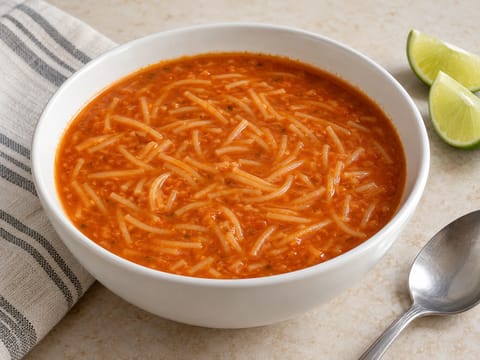
Toasted fideo noodles simmered in tomato and chipotle broth
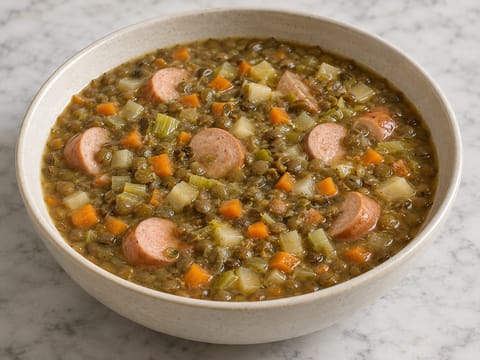
German lentil soup with Frankfurter sausages and vegetables
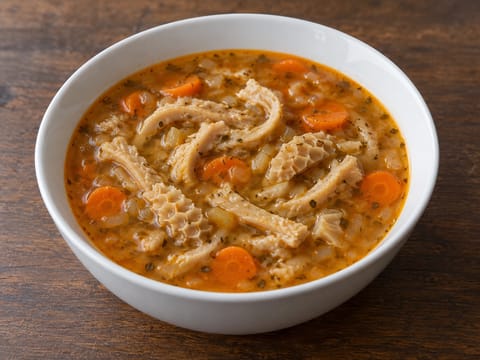
Polish beef tripe soup with marjoram, paprika and beef stock
For thin liquids like stock or clear soup, a smaller ladle gives better control and reduces splashing. For thick stews, chilli or porridge-like mixtures, a larger bowl helps you portion without repeated dipping, but you will want a sturdy handle so it does not flex under weight. A spouted ladle is useful when you are filling narrow openings, such as jars, bottles or small bowls, because it directs the flow. If you often cook in tall, deep pots, choose a ladle with enough handle length to keep your hand away from steam. If you do not have a ladle, a heatproof measuring jug can substitute for transferring, though it is less tidy for repeated portioning.
Cooking method is a helpful companion here because ladles appear most often in wet-cooking techniques such as simmering and braising, where you are handling hot liquids. Difficulty can also guide expectations: some recipes are forgiving about portion size, while others rely on even ladling for consistent cooking, as with pancakes or fritters.
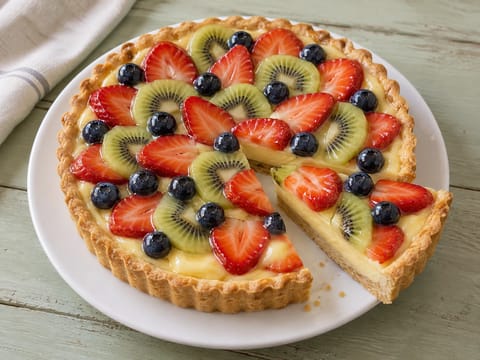
Custard tart with fresh fruit and a crisp sweet pastry case
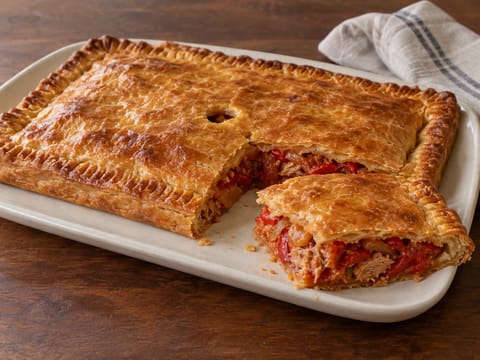
Galician tuna and pepper pie in olive oil pastry
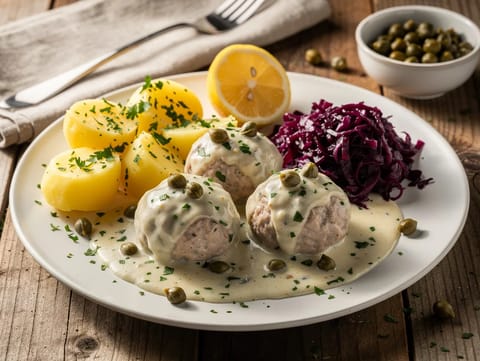
Poached veal meatballs in a creamy caper and lemon sauce
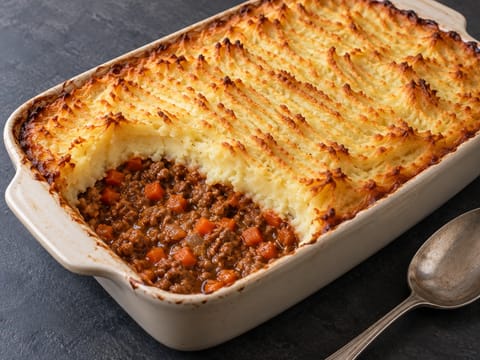
Shepherd’s pie with minced lamb and creamy mash
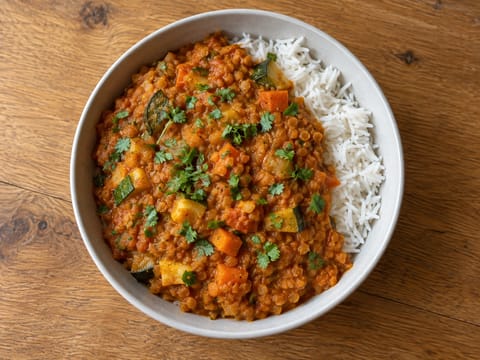
Red lentils with spiced vegetables, finished with coriander and rice
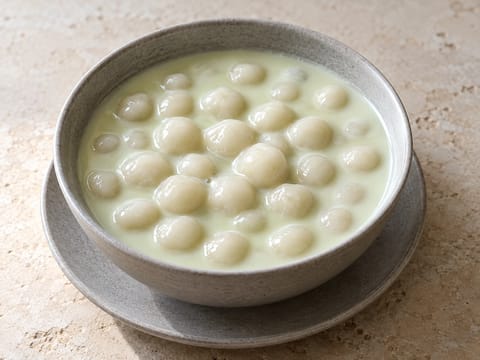
Thai rice dumplings served in warm pandan coconut milk
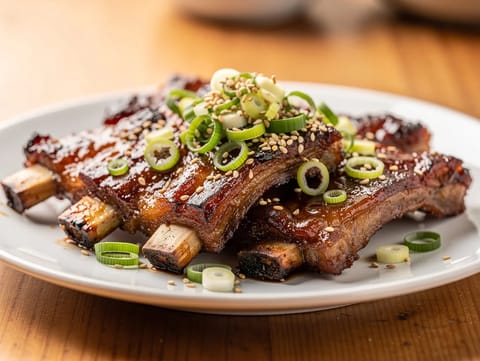
Korean pork ribs marinated with soy, garlic and pear
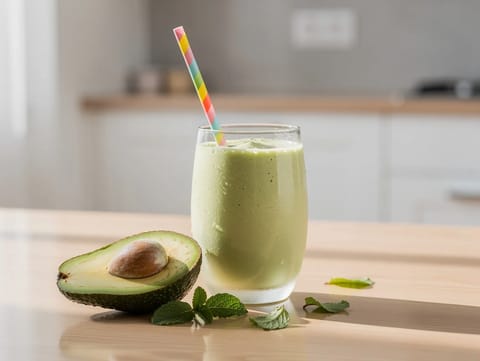
Vietnamese avocado smoothie with condensed milk and ice
Not to cook it, but it makes serving and transferring safer and cleaner. Without one, a heatproof measuring jug or a large spoon used carefully can work.
If you stir vigorously or scrape the bottom, you can mix in settled starches or fine particles. For a clearer bowl, let the pot settle briefly and scoop gently from just below the surface.
It helps when pouring into narrow containers or when you want a cleaner rim on bowls. For general serving into wide bowls, a standard ladle is usually fine.
Yes, it is a common way to portion batter consistently. Choose a size that matches the pancake size you want, and pour from close to the pan to avoid splashes.
Metal is sturdy and good for hot liquids, but can scratch non-stick cookware. Silicone or nylon is gentler on coated pans, though it may feel less rigid with very thick mixtures.
If a recipe involves a deep pot and a hot, pourable mixture, a ladle is often the cleanest way to move it from pot to bowl. Use it for transfer and portioning, and switch tools for stirring and scraping.
