Grit often sits between leek layers, beyond the reach of a quick rinse around the outside. Opening the leek before washing lets water reach those spaces. Dry the cleaned pieces if they will be fried rather than added straight to a soup.
Step by step
Remove roots and tough leaves
Trim away the root end and damaged outer layers. Keep the tender white and light green parts for the dish. Dark green tops can be tough; use them only where the recipe calls for them, such as a strained stock.
Split the leek lengthwise
Lay the leek on a stable board and cut lengthwise into halves. If a recipe needs whole sections, slit the upper layers enough to open them for washing while keeping the required section intact.
Rinse between the layers
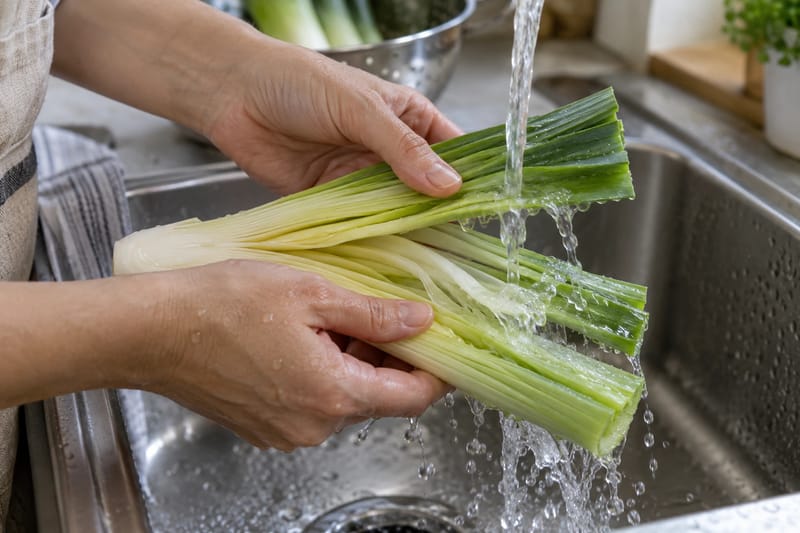
Hold the cut leek under cool running water and fan the layers apart with your fingers. Check near the leaf joints where soil collects. If you have already sliced it, swish the pieces in a bowl of clean water, then lift them out, leaving grit behind. Repeat with clean water if needed.
Drain and cut evenly
Drain or pat dry. Place halved leeks flat side down and slice across to the thickness the recipe needs. Spread the pieces briefly to check for remaining grit before cooking.
Sandy or waterlogged leeks
Pouring an entire soaking bowl through a colander can send settled sand back over the leeks. Lift the pieces out instead. For a sauté, let excess water drain away so the pan does not fill with liquid as soon as the leeks go in.