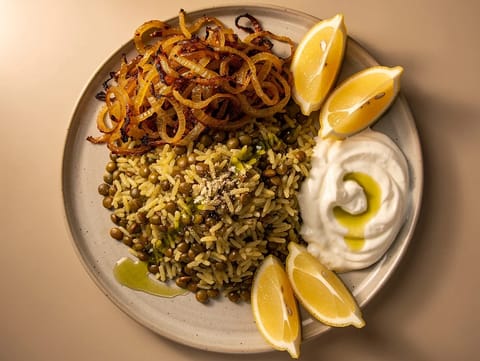
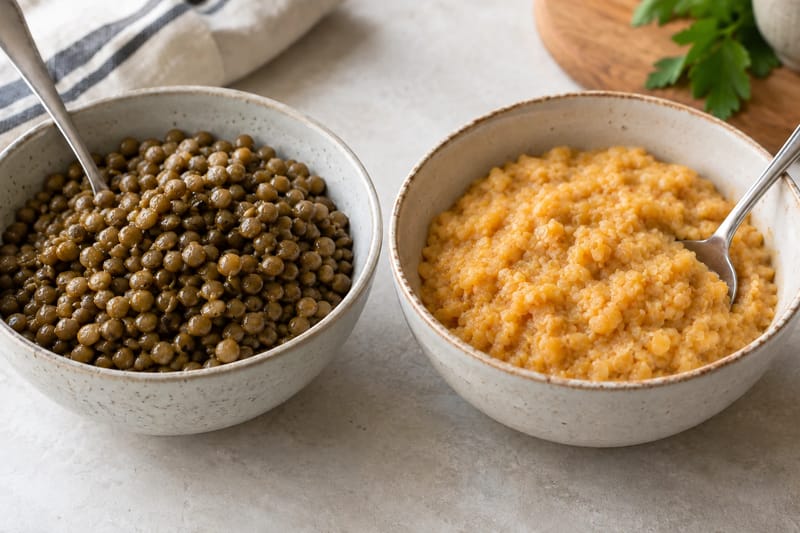
Whole lentils can stay distinct in salads, while split red lentils naturally soften and break down in soups and dals. Choose the variety for the texture you want. Gentle simmering gives you more control than a hard boil.
Step by step
Sort and rinse
Check for small stones or debris and rinse the dry lentils. Ordinary lentils generally do not need soaking. Measure the liquid for your variety and recipe, using a pot with room for expansion.
Bring to a boil, then reduce the heat
Add the lentils and liquid in the recipe’s order. Once boiling, lower the heat to a steady, gentle simmer. Stir occasionally and check that the bottom is not drying out.
Check several lentils
Begin checking before the suggested time is up. For a salad, the centre should be tender with no hard, chalky bite while the skin still holds. For a dal or purée, continue until the intended soft texture develops.
Drain or finish in the liquid
Drain excess liquid if the dish calls for separate lentils, or keep it for a soup. Add vinegar or lemon at the recipe’s intended stage, usually after softening, then adjust the seasoning.
Mushy or stubbornly firm lentils
Split lentils will not retain the same shape as whole ones. A hard boil or extra cooking after tenderness can break whole lentils apart. Old lentils and acidic cooking liquid can slow softening, so avoid making time alone the endpoint. Tinned lentils are already cooked and usually need only the recipe’s finishing stage.