
Pork Belly with Cider Gravy and Apple Sauce
Why this recipe works
- Crisp crackling: Starting the pork at a high heat helps blister the well-dried, salted skin before the lower roast finishes the meat gently.
- Richness balanced by acidity: Sharp apple sauce and dry cider cut through the fatty pork, keeping each serving lively rather than heavy.
- Pan juices add depth: Using the browned roasting juices for the gravy brings savoury intensity, while shallot and mustard add sweetness and bite.
Get the most out of this recipe
Texture tips
- For better crackling: Dry the skin thoroughly before seasoning and avoid cutting down into the meat when scoring, as moisture from the flesh can soften the crackling.
- For tender meat: Do not rush the lower-temperature roast; the pork belly needs time for the fat to render and the meat to soften.
- Keep the skin dry: When resting, leave the crackling exposed rather than tightly covered so steam does not soften the surface.
Ingredient notes
- Choose the right apples: Bramley apples are ideal because they cook down quickly into a sharp, rough purée that offsets the richness of the pork.
- Use dry cider: A dry cider keeps the gravy savoury and tangy; sweeter cider can make the sauce taste heavier.
- Mustard changes the finish: Dijon gives a smooth, gentle sharpness, while whole-grain mustard creates a milder gravy with a more textured finish.
Timing notes
- Rest before slicing: A short rest helps the pork settle, making it easier to slice while keeping the crackling intact.
- Serve the crackling promptly: The pork is at its best soon after roasting, while the skin is still crisp and the gravy is freshly glossy.
- Use the roasting time well: The apple sauce can be cooked while the pork roasts, leaving only the pan gravy to finish once the meat is resting.
Make-ahead tips
- Make the apple sauce ahead: The apple sauce can be cooked in advance, chilled, then gently reheated before serving.
- Reheat leftovers carefully: Reheat pork and gravy covered in a 180°C (355°F) oven until piping hot, then uncover briefly to help the skin crisp again.
- Store sauce and pork separately: Keeping the apple sauce, gravy and pork apart helps preserve the best texture when reheating leftovers.
Equipment you'll need
Ingredients
Instructions
- Heat the oven to 240°C (465°F). Pat the pork belly skin very dry, then score the skin with a sharp knife in shallow lines, taking care not to cut into the meat. Rub all over with the fine sea salt and black pepper.
- Put the pork belly in a roasting pan, skin-side up, and roast for 30 minutes until the skin starts to blister. Reduce the oven to 170°C (340°F) and roast for 70 minutes more, until the meat is very tender and the skin is crisp. If the crackling needs extra colour, increase the oven to 220°C (430°F) for 5 to 10 minutes at the end, watching closely.
- While the pork roasts, peel, core and cut the apples into chunks. Put them in a saucepan with 20 g of the unsalted butter and a pinch of the fine sea salt, then cook over a low heat for 15 to 20 minutes, stirring occasionally, until the apples collapse into a rough purée. Keep warm on the lowest heat, or cover and set aside.
- Lift the pork belly onto a board and rest for 10 minutes. Carefully pour off most of the fat from the roasting pan into a heatproof bowl, leaving the browned juices behind. Skim off any excess fat that remains on the surface of the juices.
- Peel and finely chop the shallots. Put the roasting pan over a medium heat on the hob (or scrape the juices into a saucepan), add the remaining 20 g unsalted butter and cook the shallots for 3 to 4 minutes until softened. Pour in the cider and simmer for 6 to 8 minutes, scraping up the sticky bits, until slightly reduced.
- Whisk in the Dijon mustard and simmer for 1 to 2 minutes until the gravy looks glossy and lightly thickened. Taste and adjust with a little more fine sea salt and black pepper if needed. Slice the pork belly and serve with the cider gravy and apple sauce.
Recipe notes
Tips
- For the best crackling, dry the pork belly skin thoroughly before salting, and keep the initial high-heat roast to kick-start blistering.
- If you are serving vulnerable groups, use pasteurised cider and ensure the pork is cooked until the meat is piping hot throughout and the juices run clear.
Substitutions
- Replace Dijon mustard with whole-grain mustard for a milder heat and a coarser texture.
- Replace cider with dry white wine for a slightly sharper gravy.
Storage
- Refrigerate up to 3 days
- Cool leftovers quickly, then refrigerate in a sealed container. Reheat pork and gravy in a 180°C (355°F) oven, covered, until piping hot; uncover for the last few minutes to help re-crisp the skin. Apple sauce keeps well chilled and can be reheated gently in a saucepan.
Ratings & reviews
Liked this recipe? Share your feedback to support our cooking community.
Tried this recipe?
Choose 1–5 stars. A comment is optional.
Stay inspired
Discover new recipes, seasonal favourites and cooking inspiration every day. Follow JustRecipes on Pinterest and Spillt.

Recipe overview
- Servings: 4 servings
- Total time: 2h 10min (25min active)
- Difficulty: Medium
- Cuisine: British
-
Allergens:
Milk Mustard
Plan your meals and get a complete grocery list automatically.
Add to meal plannerEquipment you'll need
Got ingredients left?
Find recipes using ingredients from this recipe or what you already have at home.
Find recipes with these ingredients →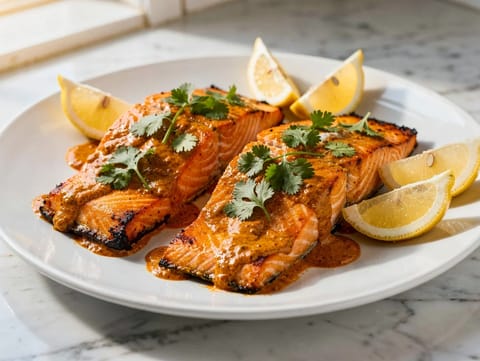
Tandoori Salmon Fillets
Roasted tandoori salmon in a spiced yoghurt marinade

Air Fryer Chicken Thighs
Chicken thighs air-fried with garlic and paprika until browned.
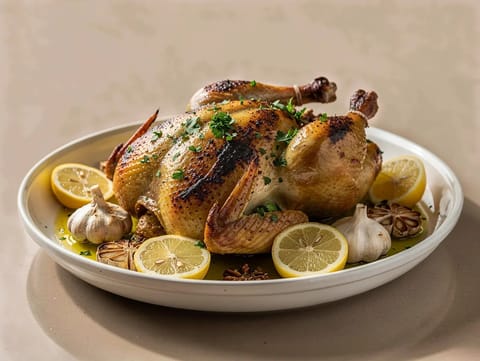
Djaj Bil Lemon Wal Toom (Roast Chicken with Lemon and Garlic)
Roast chicken marinated with lemon, garlic and olive oil
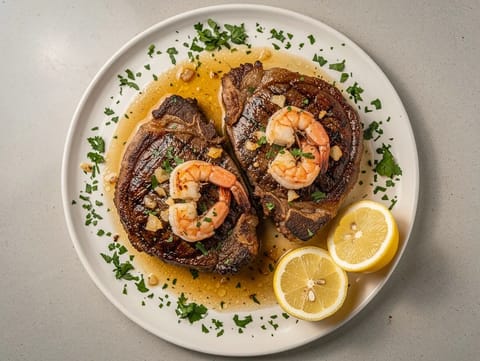
Surf and Turf (Steak and Prawns)
Seared sirloin steak with garlic butter prawns and lemon
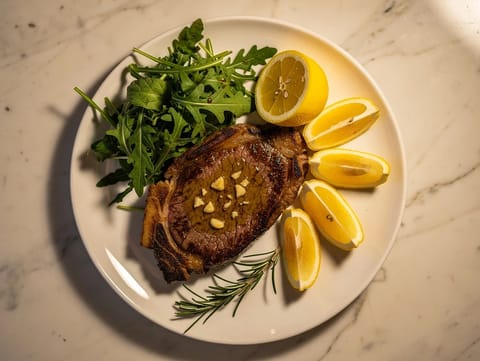
Pan-Seared Ribeye Steak with Garlic Butter
Pan-seared ribeye with garlic butter and rocket salad
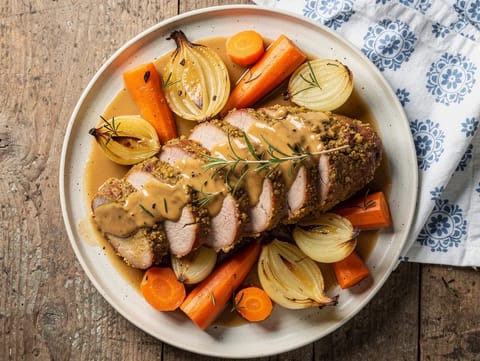
Paasbraadstuk uit de Oven (Dutch Easter Pork Roast)
Oven-roasted pork with mustard, garlic, herbs and gravy

Chinese Chicken Stir Fry
Quick chicken stir fry with vegetables and savoury soy sauce.
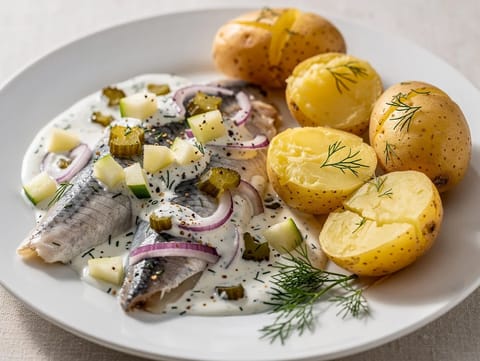
Matjesfilet nach Hausfrauenart (Pickled Herring in Cream Sauce)
Pickled herring in sour cream with apple and gherkins

Kerala-Style Fish Curry with Coconut Milk
Kerala-style fish curry with coconut milk and curry leaves
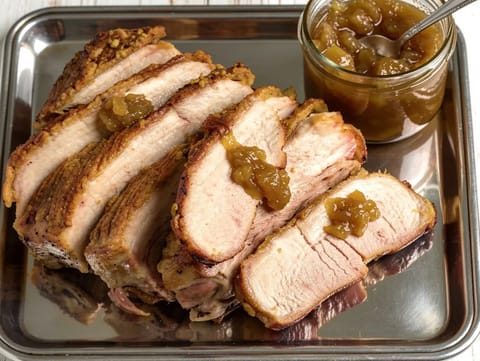
Slow-Roasted Pork Belly with Apple Chutney
Slow-roasted pork belly with crisp crackling and apple chutney
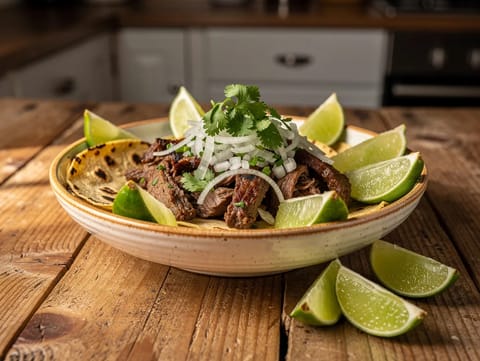
Tacos de Suadero with Onion and Coriander
Brisket tacos with onion, coriander, lime and salsa verde
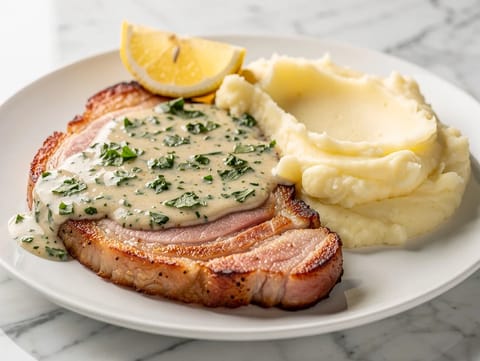
Gammon Steak with Parsley Sauce and Mash
Pan-fried gammon with creamy mash and parsley white sauce
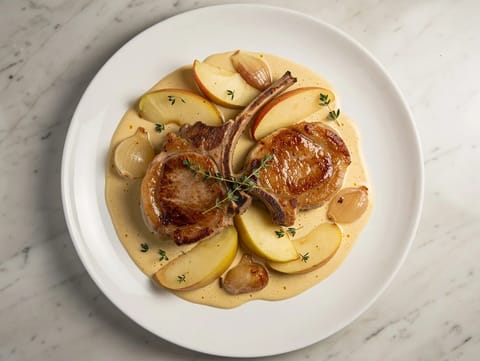
Côte de Porc Normande (Pork Chop with Apples and Cream)
Pork chops with apples in a creamy cider sauce

Poulet en Sauce Normande (Chicken in Cream and Apple Sauce)
Chicken simmered with apples, cider, mustard and double cream
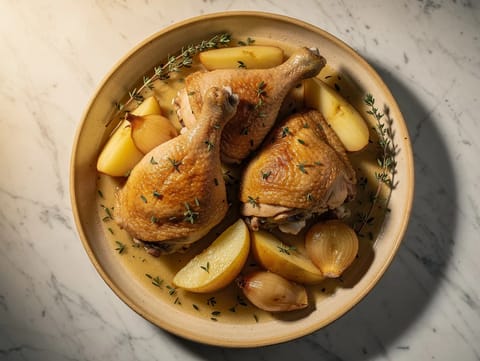
Poulet à la Normande (Chicken with Apples and Cream)
Chicken braised with apples in a cider and cream sauce
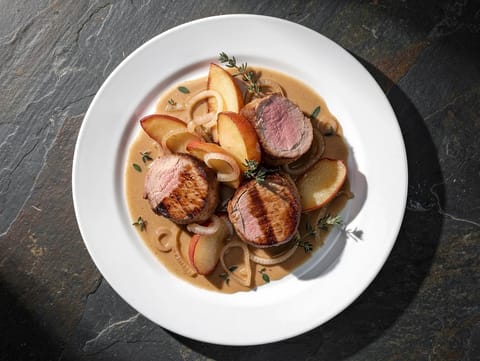
Pork Tenderloin with Apple and Calvados Sauce
Seared pork tenderloin with apples in a creamy Calvados sauce
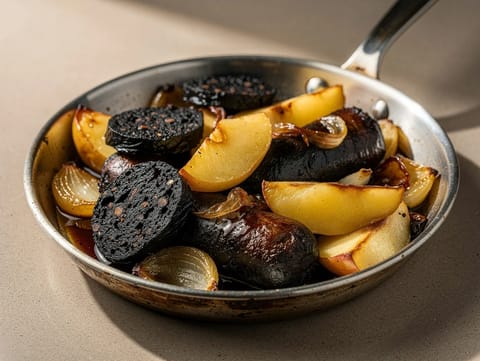
Boudin Noir aux Pommes (Blood Sausage with Apples)
Pan-fried blood sausage served with buttery sautéed apples
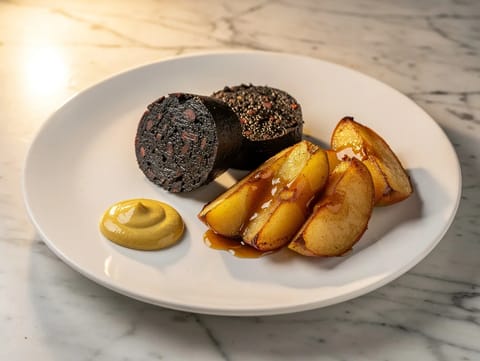
Bloedworst met Appel (Blood Sausage with Apple)
Crisp pan-fried blood sausage served with caramelised apples
You might also like

Spaghetti alle Cozze (Spaghetti with Mussels)
Spaghetti with mussels, garlic and white wine

Modern Pierogi Bowl (Potato, Quark and Bacon)
Pierogi-inspired potato and quark bowl topped with crisp bacon
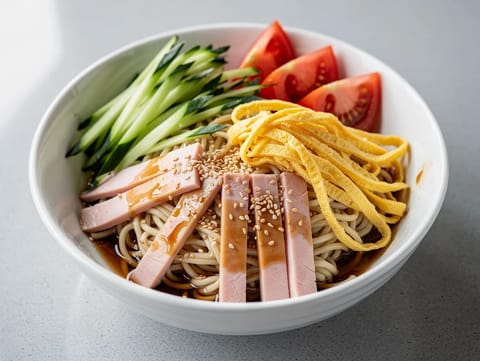
Hiyashi Chuka (Chilled Ramen with Soy and Vinegar Dressing)
Chilled ramen topped with vegetables, omelette and ham
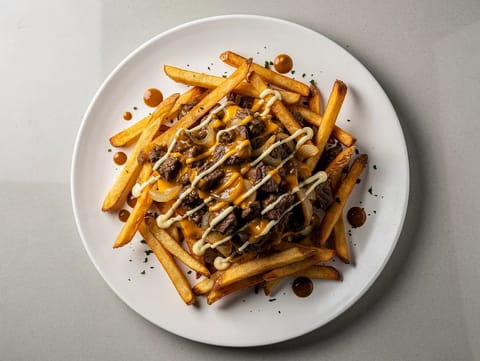
Loaded Belgian Fries with Beef Stew and Cheddar
Twice-cooked fries topped with beef stew, cheddar and mayonnaise

Karjalanpiirakka (Karelian Rye Pies with Rice Porridge and Egg Butter)
Rye pastries filled with rice porridge and served with egg butter

Pork and Chive Dumpling Platter (Jiaozi)
Boiled pork and chive jiaozi with soy and black vinegar
Make this recipe easier next time
AdvertisementThese tools help you get better results with less effort.
Misen 8-Inch Chef Knife
- AUS-10 steel
- Balanced design
- Less traditional feel
Titanium & PP Double-Sided Cutting Board
- Separate surfaces for meat and produce
- Resists odors and stains
- Harder on knife edges than wood or plastic
All-Clad Tri-Ply Stainless Steel Saucepan
- Excellent heat control
- Premium build quality
- Expensive
OXO Good Grips 2-Piece Cutting Board Set
- Two useful sizes with reversible cutting surfaces
- Dishwasher safe and easy to clean
- Plastic surfaces will show knife marks over time
Enjoy cooking with JustRecipes?
Add JustRecipes as one of your preferred Google sources to discover our recipes more easily across Google Search.
Add JustRecipes to GoogleEvery recipe on JustRecipes follows the same structured editorial process. Learn how recipes are created, validated, translated, illustrated, and continuously improved across the platform. How we create recipes.
